This article is part of Blink’s “frontline first” series: content created specifically for leaders of deskless or distributed teams. We know that the job of frontline leadership is entirely different from managing ‘desk-based’ teams, so this is for you and your unique set of challenges.
It's somehow nearly the end of 2022, which means it's high time to start looking ahead to the year ahead.
For leaders in frontline organizations, this can be more than a little daunting. After two years of challenges caused by the pandemic and the Great Resignation, the looming prospect of a recession promises yet more adapting and innovating in order to survive and thrive.
So we'd like to help.
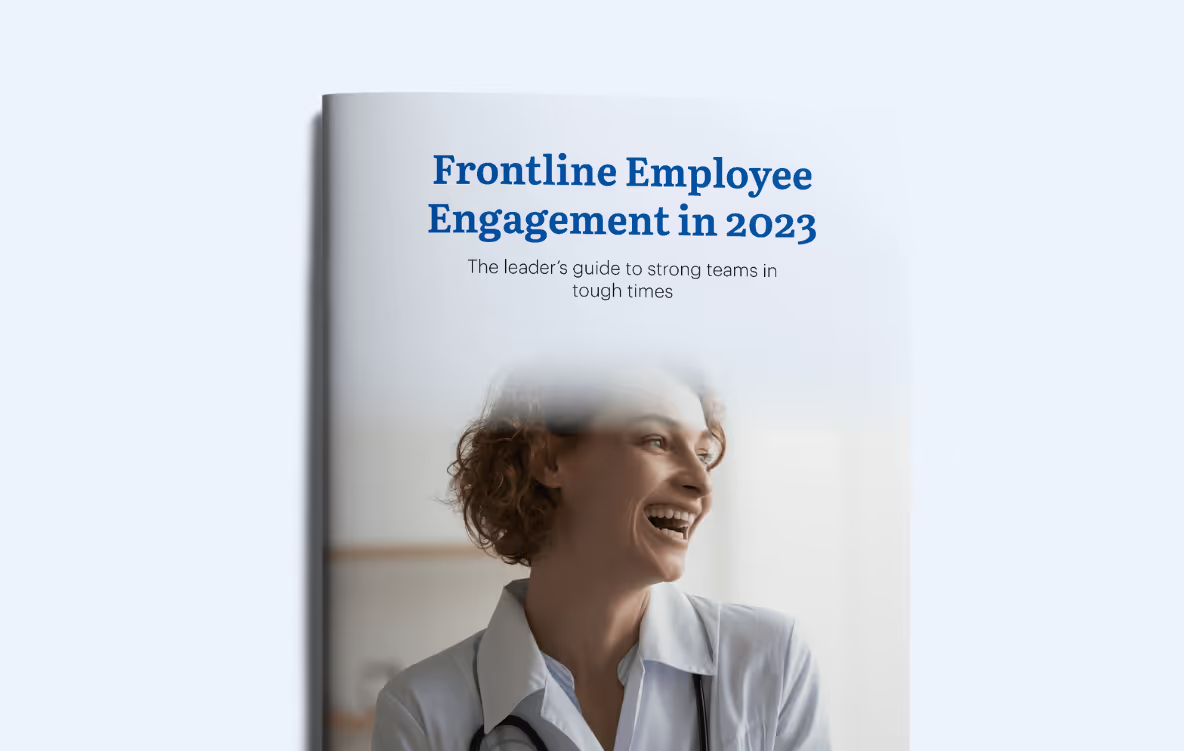
After working with hundreds of frontline organizations, we've created a short guide that breaks down the core principles to building a stable and successful frontline workforce for 2023 and beyond.
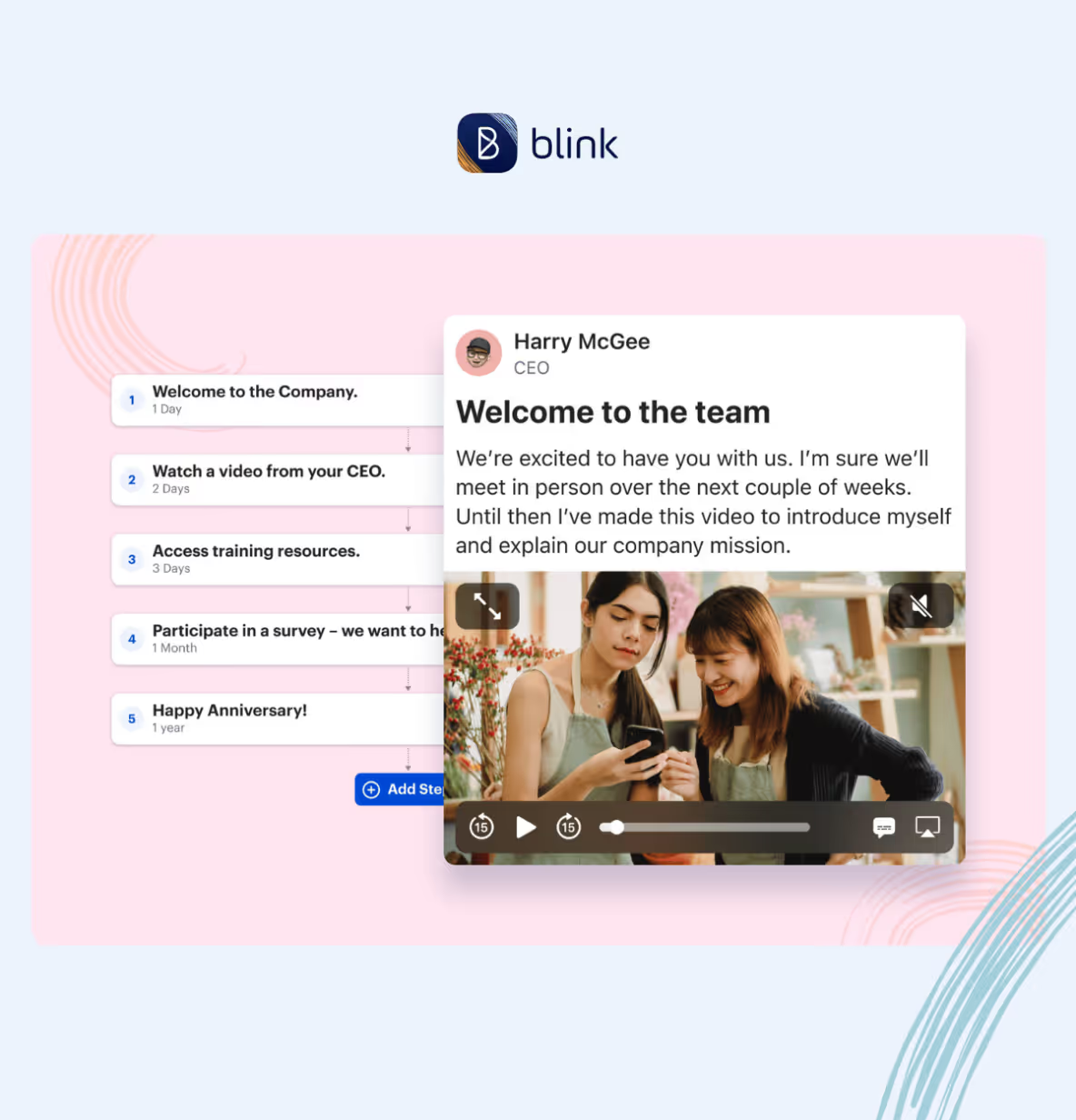
You can download a copy for free here or by clicking on the image below - we hope you find it useful and inspirational as you look to the new year.
This article is part of Blink’s “frontline first” series: content created specifically for leaders of deskless or distributed teams. We know that the job of frontline leadership is entirely different from managing ‘desk-based’ teams, so this is for you and your unique set of challenges.
It's somehow nearly the end of 2022, which means it's high time to start looking ahead to the year ahead.
For leaders in frontline organizations, this can be more than a little daunting. After two years of challenges caused by the pandemic and the Great Resignation, the looming prospect of a recession promises yet more adapting and innovating in order to survive and thrive.
So we'd like to help.
After working with hundreds of frontline organizations, we've created a short guide that breaks down the core principles to building a stable and successful frontline workforce for 2023 and beyond.
You can download a copy for free here or by clicking on the image below - we hope you find it useful and inspirational as you look to the new year.

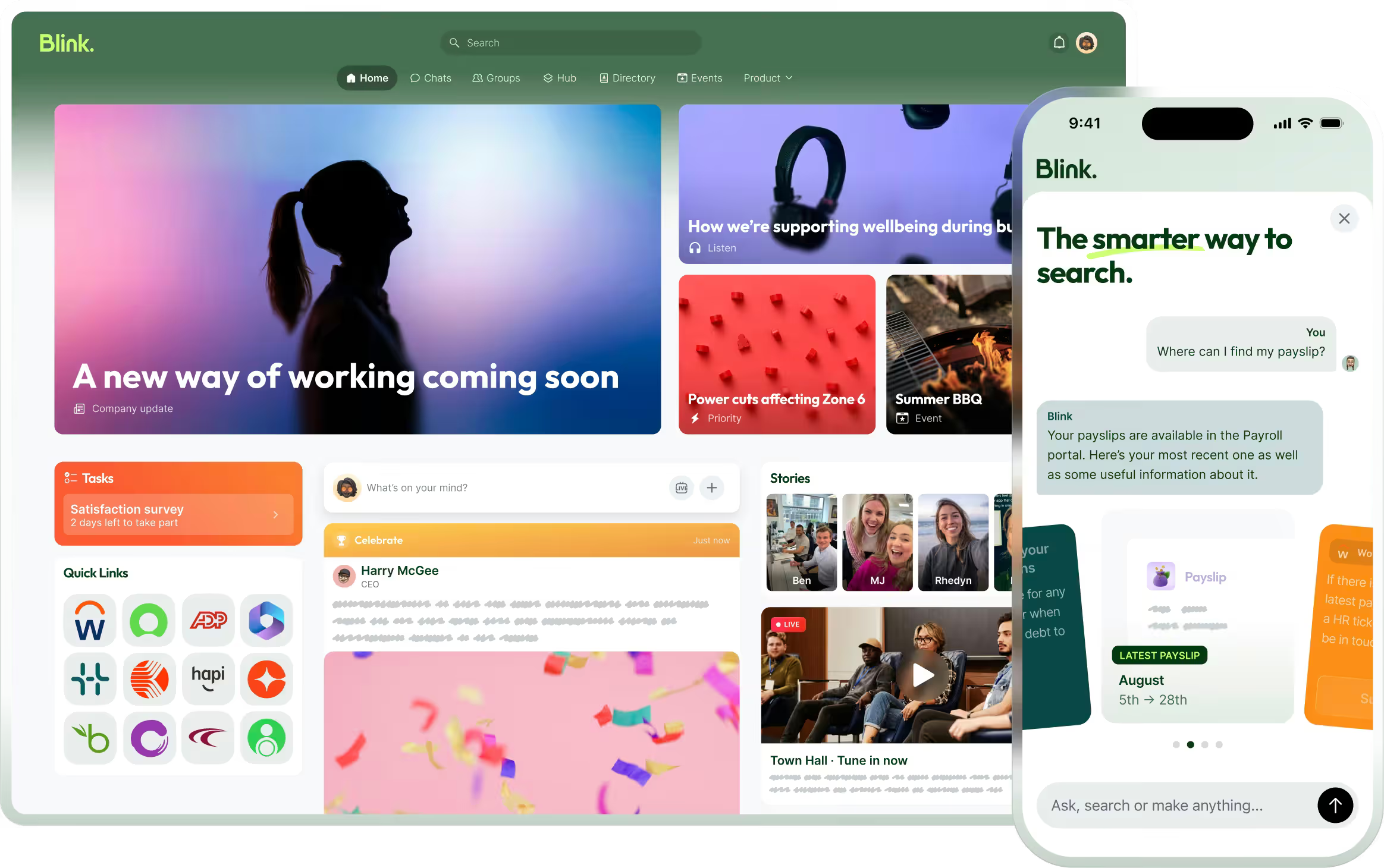
The once clunky, desktop-bound relic has been making a comeback in the era of remote work and mobile design with modern intranet features.
Workers need access to the documentation as they step away from the desk. They require a way to communicate with their coworkers securely. To meet the demands of their growing mobile workforce, companies are taking another look at intranets.
While modern intranet features several quality-of-life improvements and productivity hacks, they aren’t always used to their fullest. A recent survey found 57% of employees saw no point in their company intranet.
It doesn’t have to be like this.
Let’s go over the best features a modern intranet design offers and how you can use them to increase engagement and boost productivity.
What does a modern intranet look like?
Modern intranets are mobile.
Instead of the old-fashioned office-bound software of yesterday, we have sleek, multipurpose apps. Workers can benefit from these systems on the frontlines or at a desk.
Despite being more accessible than ever, these intranets are more secure. Each employee can be granted access to only the materials they need. Each person has their feed, showing them the information and updates relevant to them.
The design is simple, and the emphasis is on easy-to-navigate, uncluttered browsing. You want your workers to find the required content quickly, so using the app doesn’t feel like a chore.
Finally, a modern intranet isn’t just top-down. Employees can communicate with each other and with supervisors. They can generate content, engage with others’ posts, and develop personal connections.
The 8 best modern intranet features
Newsfeed
CMS
Integrations and micro apps
Single sign-on to integrations
Employee directory
Multi-way conversations
Mobile-first
Analytics
Modern intranet platforms should help you engage your employees and improve your company’s productivity. Here are the key features of a modern intranet.
1. Newsfeed
A company-wide feed lets your employees learn about important issues and share achievements with others. You can configure stories to be shared with all workers or only those affected by a problem.
2. CMS
A content management system (CMS) lets workers access the documents and files they need. Workers can easily find the files and even share the files with others.
3. Integrations and micro apps
A modern intranet isn’t an isolated software system. Your intranet should integrate with the apps and programs you use every day.
You should be able to connect with programs like Microsoft 365 and Slack.
Besides the integrations, your employees will also benefit from micro-apps. Micro-apps are customized programs that let users request time off or provide anonymous feedback, all from the intranet itself.
4. Single sign-on to integrations
Juggling multiple passwords can cause huge delays for employees. 60% of workers surveyed reported that passwords prevent them from doing their job.
Remembering multiple passwords is hard. Single sing-on prevents this issue.
5. Employee directory
Finding the right person to connect with saves time for everyone. With an employee directory, you can find up-to-date contact information for every employee or only the employees you have access to.
6. Multi-way conversations
Communication should be a two-way street. Instead of a constant flow of information from managers, let your employees provide feedback and chat securely with individuals and groups.
7. Mobile-first content
If your intranet is optimized for desktops only, it’ll only help desked employees.
Statista expects the mobile workforce in the United States to grow by 15 million between 2020 and 2024. These workers need a mobile-friendly design to work effectively.
8. Analytics
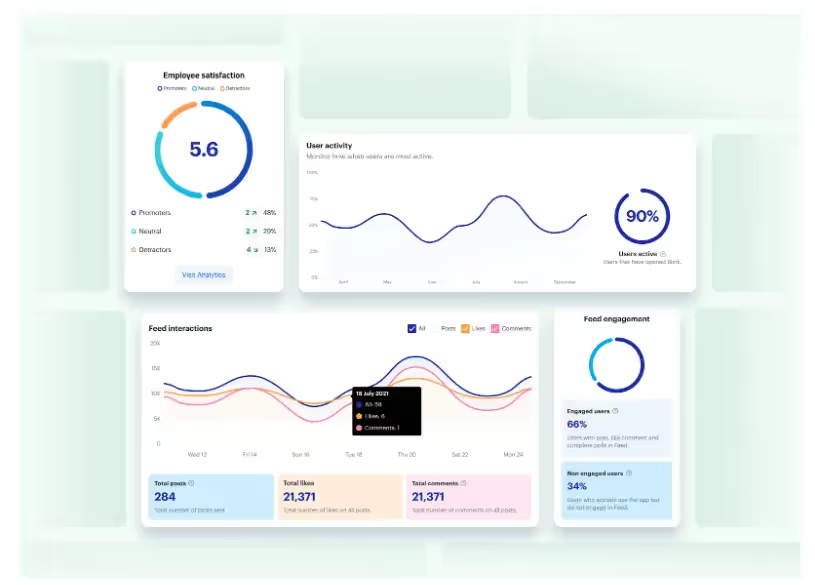
Using analytics, you can check how each post in your feed performs, how engaged your employees are and compare these levels to previous periods.
You should be able to track individual and group engagement and even see the active periods when your workers use the app.
Final thoughts: 8 modern intranet features your organization needs
A mobile intranet can make a huge difference in how your workers engage.
Sharing information they need and letting them have a platform to connect with others is no longer a luxury. It’s a necessity.
You need a platform your workers can access from anywhere to communicate with coworkers and catch up on the news from the head office.
Blink has all of these features and more. Sign up for a free trial today to see just how big a difference a modern intranet can make for you.
‘As leaders, we should be measuring engagement in everything we do’
– Simon White, VP People at Blink
Frontline leaders have long been searching for the most effective way to engage their deskless workforce. From Employee Resource Groups (ERGs) and Learning & Development initiatives, to intranets and Enterprise Social Networks (ESNs), they've tried a variety of approaches with varying levels of success.
This has led to a Frontline Gap, an issue that many organizations, especially those with deskless employees, face. It is a void where initiatives fail to have their intended impact due to a lack of engagement from workers.
To bridge this gap, employers must look beyond traditional methods such as ERGs and ESNs, and instead focus on using employee engagement surveys to connect directly with the needs of their deskless staff.
Frontline workers are looking for a faster, more efficient, and more useful way to do their jobs, while leaders want to bridge the Frontline Gap and connect with their deskless staff. To be able to achieve these goals, employee engagement surveys can help employers achieve direct conversations with frontline workers and understand the needs of their employees.
By taking a proactive approach to employee engagement and using pulse surveys to directly and regularly connect with deskless employees, organizations can begin to close the Frontline Gap, identify engagement challenges and create a more productive, cohesive, and engaged workforce.
Employee engagement surveys can provide valuable insights into how employees feel about their work environment, job satisfaction, team dynamics and so much more. In this guide, we'll take a brief look at why frontline leaders should conduct employee engagement surveys as a regular practice, before diving into our step-by-step guide on how to conduct your first employee engagement survey the right way.
Why employee engagement surveys are important
The solution to bridging the Frontline Gap lies in approaching frontline engagement as something that is earned, rather than simply expecting it from employees. Instead of relying on traditional methods such as ERGs and ESNs to increase engagement, employers must focus on creating an environment where workers feel truly valued and respected.
The first step towards this lies within employee engagement surveys.
Employee engagement surveys are an important tool for frontline leaders to measure engagement and understand the feelings of their deskless employees. While ERGs and ESNs can provide a good foundation for engagement, taking proactive steps to directly connect with your team is essential in order to create a productive and cohesive environment.
As businesses today are operating in an increasingly competitive hiring market, salaries and benefits are becoming more expensive and difficult to manage. With no visibility into what is going right or wrong, employers are left in the dark as to why their staff turnover rate is on the rise and morale is low.
This lack of insight into employee engagement can lead to disengaged employees, decreased productivity, and high turnover rates, alongside a weaker Employer Value Proposition (EVP) as talent is lost.
Employee engagement surveys can help employers gain the insights they need to effectively measure and address employee satisfaction, team dynamics, and much more. Collecting and actioning this feedback is one of the key employee engagement drivers, and is considered an employee engagement best practice.
So, how exactly can employee surveys support your workforce and drive success in your goals?
Enable
By regularly understanding what they need, leaders can better enable their workforce to succeed. Engagement surveys can help identify key areas that employees are struggling in and provide valuable feedback to address these issues.
One of the main pain points for organizations, especially those with deskless employees, is the lack of resources and support needed to ensure their workforce can work effectively. Without the necessary engagement tools, communication channels and access to information needed to do their job efficiently, deskless workers are often left feeling frustrated and under-valued.
Frequent employee surveys help employers find out what their employees need to do their jobs better. It also helps the employer know if their employees feel respected and valued. The information gained helps them ensure they have the tools and resources needed for workers to do their job well, so that companies can keep a good reputation and meet their hiring targets.
Understand
It can also be hard to collect data from the frontline, as depending on the industry and environment they work in, traditional methods such as paper surveys or iPads may not be practical. For example, if they are working outdoors or in an extreme environment where digital devices cannot operate, it can be difficult to get real time feedback from them.
Additionally, it's crucial to have something that's easy to use, in every frontline worker's pocket. By giving managers what they need to measure employee engagement and continuously improve the employee experience, employee surveys can fill this gap and directly benefit the organization.
One of the most prominent pain points faced by organizations is a lack of understanding of what engaged employees need to be successful, especially in the frontline. Leaders that are out of touch with their workforce can cause real issues, including low morale, decreased productivity and high turnover rates.
To truly understand what engaged employees require, employers must conduct employee engagement surveys, aiding them in identifying key pain points and areas that need improvement.
Engage
Another key objective of employee pulse surveys is to improve and measure employee engagement. It is crucial to engage employees in order to create a positive and productive workplace. Employee engagement surveys measure levels of employee satisfaction, and identify the strengths and weaknesses of policies, programs, goals and objectives within an organization.
By understanding where leadership or productivity are weaker, employers can effectively engage their workers through real-time critical information and structured interventions tailored to improve engagement.
This is a pain leaders are facing: the frontline isn't sharing feedback because they don't want to. Gaining the engagement of the frontline by first earning their trust is key to boosting future engagement levels and increasing employee retention.
How to successfully conduct an employee engagement survey
As we have looked at above, conducting employee engagement surveys can encourage employees to speak up, give them a voice, and help employers to create a more productive environment.
If you're planning to conduct an employee engagement survey, keep this in mind.
The purpose of an employee engagement survey is not to measure employee engagement, it's to improve it.
Employee engagement surveys should not be done out of curiosity or to "check in" with your employees, they take too much time to be done this way.
Simply having an employee survey is not enough - the way in which you conduct your surveys can make all the difference between success and failure.
LeadershipIQ surveyed over 3,000 HR executives to see "how good" their employee engagement survey was, and only 22% said they were getting good results.
So how can you conduct employee surveys so they are actually meaningful? Looking at industry leaders, we see the following behaviors taking place to launch successful surveys:
1. Get rid of annual surveys
Gone are the days of the bog-standard annual engagement survey that provides little useful information, leaving employees disengaged and uninterested.
Instead of a singular survey at one point in the year, organizations should instead be taking a more agile approach to employee engagement surveys by conducting regular pulse surveys with smaller sample sizes.
If you already have an annual survey procedure in place, the first thing you should do is look at your current process and consider whether some parts of it can be scaled back or done more frequently.
2. Define a clear, attainable goal
You'll have to really think about what information you want to get out of this survey, sometimes it's not just a simple case of finding out how your frontline employees are feeling. This is an opportunity to encourage your team to share feedback on every aspect of their role, your role, and even the CEO's right at the top.
For example, if you have a low retention rate that you want to try and improve, what questions need to be asked? What data will help you put together a plan?
Your employee engagement survey questions should be strategically planned in a way that shows the leadership team genuinely cares about their frontline workers and how their careers can be developed. This should be made visible from the start to the end of your survey.
3. Plan ahead
Once you've figured out what information you wish to gain from your survey, it's time to plan ahead and get everything into place. Here are some of the main points you should consider when you're ready to plan your survey:
Have you got the right technologies in place to be able to conduct your survey?
What do you really want to find out?
Do you need to align with CIO or get buy-in?
When is the right time to conduct your survey? You'll need to give your employees an adequate amount of time to finish it.
Are you targeting all of your employees or just a specific group?
4. Let the frontline know!
Once your survey is ready to go, you need to get the message out there.
Reiterate the importance of the survey to your frontline staff and how it can positively affect their role at work and the environment in which they work. It's a way to show them they are going to be heard and listened to (you need to actually follow through as well, but more on that later).
Communications leaders should be well briefed in plenty of time and should be tasked with sending out reminders to all who are involved in taking the survey.
One way you can reiterate the importance of your employee engagement survey is to release it with a message from the CEO, or another senior leader.
5. Act and restart
Once you've received your survey results, you need to come up with a plan stating how you plan to act on your responses. This is a key aspect you can't shy away from.
This is also another chance to acknowledge employee contribution and shows that the right people have seen the results and will take action. Below is a recent example from John J. Herman, CEO of Penn Medicine Lancaster General Health.
He acknowledges and thanks staff for taking the time to do the survey, reiterates their feedback is important, and lays out in clear bullet points what their next action points are. You can view the full message here.
This should be an ongoing effort and you should keep your frontline workers informed of your processes and decision making, as a way of letting them know you are serious about improving your workplace.
If you fail to truly act on the feedback they have taken the time to give you, you risk devaluing future surveys and decreasing response rates.
You should repeat your survey at regular points throughout the year, to see if the employees are satisfied with the measures you have taken and tweak different aspects of your strategies to raise levels of employee engagement.
Considerations for conducting your first employee engagement survey
Plan
As we highlighted above, surveys should not be done out of curiosity, you need a real plan.
So when you're thinking about surveying employees take the below into account:
Who's your audience?: Whether it's teams or departments, segment your stakeholders into groups.
What do you want to measure?: What do you need to find out to improve the employee experience? Set goals, and measurable KPIs.
What are you asking?: Once you know what to measure, what questions do you need to ask to get actionable insights?
What type of survey?: Once you have your audience and goals, what type of survey are you going to run? There are different types such as, benefit surveys to measure how satisfied your frontline is with their benefits and rewards or you could even run onboarding surveys for new hires to see how well they’ve been introduced to the business.
What format?: How will the survey be received? Via email, via an app? What format will the questions be? Multiple choice or free text? Take into consideration your audience and goals and use these to guide the format you choose.
Timing: When's the best time to send your survey to your audience? How long will you leave the survey open for? How many follow up emails will you send to those that don't respond?
There's a lot that goes into planning an employee survey, but you need to do this to set you up for the best chance of it being a success.
Platform
Do you have a way to easily and efficiently collect and analyze data? Depending on your organization you'll need to make sure you use a platform that meets your requirements.
Think about who you are going to survey, are they desk based or deskless? Do they work from home? Are they on the frontline? Do you need the survey to work on desktop and mobile?
For example, our employee survey feature is used by organizations whose employees are on the frontline, this puts more importance on the mobile functionality of our survey feature to allow for quick and easy responses wherever employees are.
If your employees feel disengaged from their colleagues and management team it's time to introduce a platform that can meet your team's needs whatever their job role.
Trust
Employee surveys are a great opportunity to establish trust with your employees that you will listen and understand their feedback, as well as make an effort to act on how they are feeling.
But, they also pose a risk of doing the opposite if you don't do them properly.
A recent campaign undertaken by Blink found that 50% of employees wanted to leave their current position as they didn't feel like management took their complaints seriously. One third didn’t even think their organization would act on their feedback.
This again highlights why employee surveys shouldn't be done out of curiosity. If you run the survey, get the results, and don't act. What do you think will happen to the figure above?
But, if you act and communicate changes made off the back of feedback, not only could these go a long way with improving employee engagement, but build a lot of trust with your employees.
From an employee perspective, it will also be important if the survey is anonymous. This in turn will increase trust and eagerness to take part in the survey. Anonymity is important if you want to get real honest feedback from staff, they will feel more comfortable sharing the truth if they know it won’t come back to haunt them.
Communication
Raise awareness around your survey going live! Involve your communications leader in using as many formats as possible to get the message to the frontline.
This could involve emails, printed posters, and using an employee engagement mobile app.
These communication points need to explain the importance of taking part in the survey and why employee feedback is so important to improving the work culture.
Content
When you're planning out your employee engagement questionnaire, don't be afraid to ask difficult questions. You need to ensure you're set up to get the most out of it.
For example, Facebook found that simply asking employees how long they intend to stay was more than twice as accurate at foretelling their future turnover than machine-learning forecasts.
What's even more telling is that they found when people don’t participate in their two annual surveys they are 2.6 times more likely to leave in the next six months.
The content within your survey needs to be clear, concise, and engaging. There's no need to overcomplicate your questions or try to hide behind big words. Ask the questions in a way that will get a truthful response.
How Blink employee surveys can help you meet your goals
Most employee survey tools are designed for desk-based workers, not the frontline - Blink's Employee Surveys make it easy for you and your teams to quickly and easily conduct employee surveys.
We make it easy for frontline organizations to get the data that matters.
Triple your response rate
Get your survey seen and responded to in an app designed for everyday frontline use. Instantly transition away from paper surveys to having surveys appear seamlessly on every frontline team member’s device.
This gets rid of friction caused by having to use other platforms, with different passwords and make it easier for staff to respond as everything is in one place. From paystubs to scheduling and even critical documents - your surveys are in an app that gets opened an average of seven times a day.
Launch in 90 seconds
Ask questions fast, get answers faster. Our mobile app makes creating and sending surveys easy. From selecting your audience to selecting questions you’ll be done in minutes.
Science-backed questions
We offer a set of science backed Qs which are great if leaders don't know what to ask, you also get the option to add in your own.
Get action-ready insights
Easy-to-use reports to make impactful decisions. Merge this with Frontline Intelligence - together with engagement stats and you’ll have an overall view of the health of your organization.
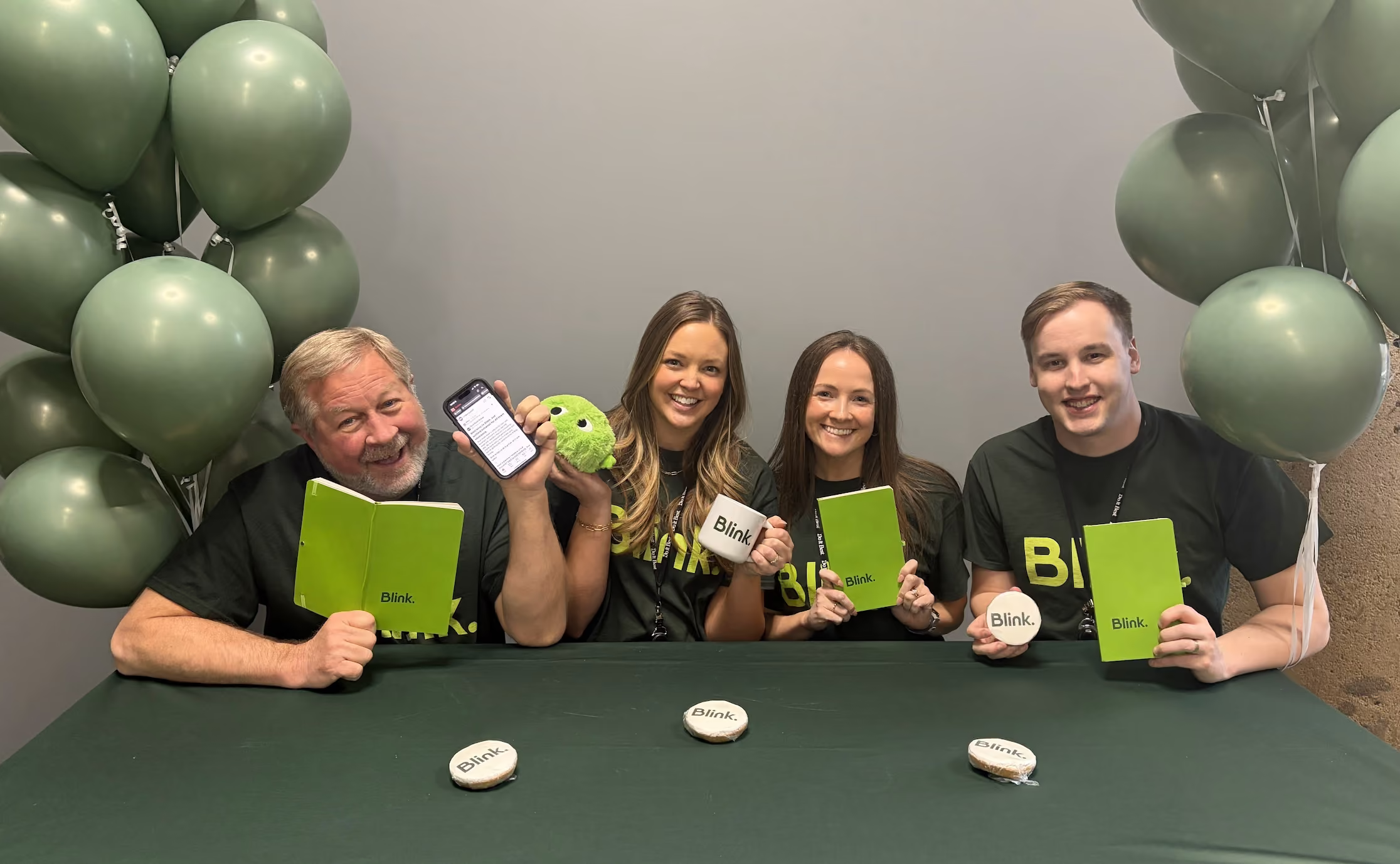
For this week’s Life at Blink, we’re excited to shine the spotlight on Joe Whitney! As a Senior Sales Development Representative, Joe has been an integral part of the team for the past year. Starting out as an SDR, Joe’s dedication and growth have made a real impact at Blink. Join us as we explore Joe’s journey, his role in shaping our sales efforts, and what he believes makes Blink a special place to work.
How long have you been at Blink?
I’m coming up on two years — in about five days, it'll be my Blinkiversary. There is a lot going on so it’s gone by really quickly.. Looking back, it feels like these two years have flown by. So many other things outside of Blink seem to have moved a bit slower. But life moves fast, and the older you get, the quicker it seems to go.
What initially attracted you to join Blink?
I have kind of a funny story — well, not exactly funny, but it's the story of how I got to Blink.
For the eleven years before I joined Blink, I was a professional hockey player. I played four years at Boston College, and after college, I signed with the New Jersey Devils to play professional hockey. It was an amazing 11- year journey.
It took me to a lot of different places — I lived in San Antonio, Texas; Tucson, Arizona; Hartford, Connecticut; Hershey, Pennsylvania; New Jersey; and then over to Sweden and Germany. My family and I lived there for two years each. It was a great experience, and I learned a lot of valuable life lessons from seeing different cultures and parts of the world. I think it made me more well-rounded, and I’ve been able to bring some of those experiences into my work at Blink and in sales.
It was funny because when we started having kids, my wife and I never imagined we’d be taking two kids to live in Germany or Sweden for two years. But I wanted to continue my career, so we made the move. We packed all our bags and flew to Sweden. I played in a city called Linköping, and as soon as we landed, it felt like our new home, and the people were incredibly kind. It was a great culture to live in and be a part of, and I thoroughly enjoyed it.
When my contract expired, we moved to Germany to a small city calledIserlohn, about two hours from Amsterdam. The lifestyle there was very different from Sweden. It was more like North America. The town was small and quiet, but it was a great experience. I learned a lot about German culture and the people. And of course, they love their beer, which was a lot of fun!
When that career ended, it was a bit of a “holy smokes, what do I do next?” moment.
At first, I wasn’t sure if I could do it, since I didn’t have any prior experience. But after reassurance from mentors, friends, and family, encouraging me that many of the same skills in athletics can be applied to sales as well was when I decided to dive in. It was important for me to start as an SDR and work my way up.
What's a project you are proud of from your time at Blink?
The thing I’m probably most proud of at Blink is how, despite being a smaller company with a lot of changes and pivots, especially within the SDR team, we’ve been able to build something meaningful.
When I joined in October 2022, our new CRO, Jim McInerny, had just been hired, and we were preparing to go to market in the US. One of the main reasons I came to Blink was to have an impact on the culture and a smaller team. What I'm most proud of is helping to build the culture within the sales development program.
I'm really proud of the fact that after two years, we’re starting to gain traction, building out the program, and seeing the progress we are making as a company. It’s been a journey, but it’s exciting to see how far we have come.
How would you describe the company culture at Blink in three words?
Innovative, creative, tight-knit team.
There are so many different ways to describe it, which makes it tough to choose just three words. I think the culture is very open and transparent, and we have a lot of great people working together towards one mission. That’s what makes it so fun to be part of the team.
Coming from an athletic background, I'm all about teamwork, and it feels great to be in a company where the mindset is very team-oriented. There aren’t any selfish people in our organization, and that makes it incredibly enjoyable to work with everyone.
What's one thing you're excited about for the future of Blink?
I feel like we’re at a point now where we truly control our own destiny. The sky’s the limit for us, and I believe that everyone on the team is fully bought into the company’s mission. The opportunities we have and the market we're tackling are so big and global that we have the potential to change the lives of so many people in different parts of the world. This could have a huge impact on how people approach their work and how they feel about going to work.
I'm really excited about the opportunities ahead of us as a company to transform the way people work and make this as big as possible.
Can you tell us about a recent initiative or program launched at Blink that you found particularly exciting?
Yeah, I think, obviously in sales, day to day, you’re calling people, trying to explain our approach to the employee experience, and inspiring them to see things differently. But I wouldn’t call that a specific project; it’s more like an ongoing journey in sales.
What really inspired me was some of the work we did with some of our biggest customers, particularly on the product side. They’ve done some really cool things within a work app that feels more like a social app we use in our everyday lives. The product features and the vision our product team has for making this next generation of apps so modern is really exciting to see.
Why do you work for Blink?
In general, when I first started, I wasn’t really sure what to expect. There are a million different jobs out there, and a lot of people work on cool things. But I’ve really found a sense of pride in our company’s mission and the vision of where we want to go.
There are so many essential workers around the world who, like us, are trying to take care of their families, make a living, and provide the best opportunities for their loved ones. Many of the people we serve are blue-collar workers who take immense pride in what they do. We often talk about how they’ve been underinvested in and don’t have the same resources as other types of workers.
Serving this part of the workforce is something I’m really proud of. I have a lot of friends and family members who are blue-collar workers on the frontlines, and it took me a little while to realize there was such a gap in support for them. Being at Blink and seeing it firsthand through our customers was eye-opening and helped me fully embrace our mission of serving essential frontline employees. Ultimately, these workers make the world go round.
Providing a better digital employee experience for these essential works and making it much easier to access all the tools they need to do their jobs productively is incredible. It feels like a lifelong mission.
Since joining Blink’s London office less than a year ago, our Data Analyst, Nikita, has already made her mark — tackling data-driven projects, collaborating across teams, and fueling the mission to empower frontline workers. She loves the energy of a smaller startup and finds real purpose in crafting tech solutions that make a positive impact.
Read on to learn how Nikita dove into the world of advanced analytics at Blink, why she’s proud of her work on the AEI tool, and what keeps her excited about the future!
What initially attracted you to join Blink?
I was really inspired by Blink’s mission to empower frontline workers. It was great to see technology being used for such a positive cause. I’ve worked at startups before and really enjoy the energy of a smaller company. Before joining Blink, I was at a slightly bigger startup, but I love our size and find what we’re doing here incredibly exciting.
What's a project you are proud of from your time at Blink?
AEI! I’m particularly proud of the Advanced Employee Intelligence (AEI) tool. I’ve been working on it with Izzy for the past few months, and it’s been exciting to provide customers with insights they didn’t have before. This tool offers actionable metrics, and it’s gratifying to see how our data can truly help other organizations.
How would you describe the company culture at Blink in three words?
I would say supportive, vibrant and energetic.
What's one thing you're excited about for the future of Blink?
I’m really excited about the coming year at Blink. We have a lot of great new customers on board, which means there will be even more data to explore. I can’t wait to see the insights we uncover and how they’ll help us continue innovating.
Can you tell us about a recent initiative or program launched at Blink that you found particularly exciting?
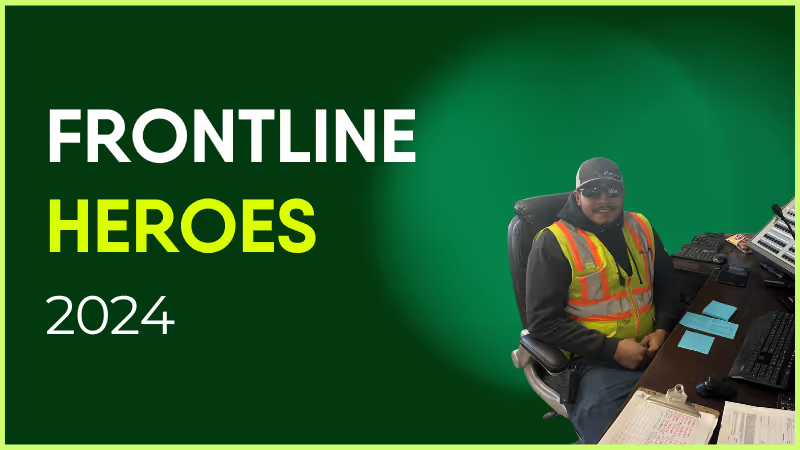
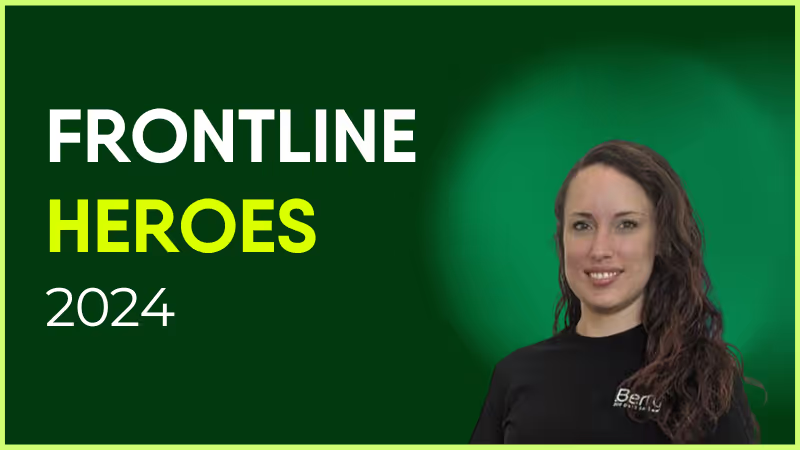
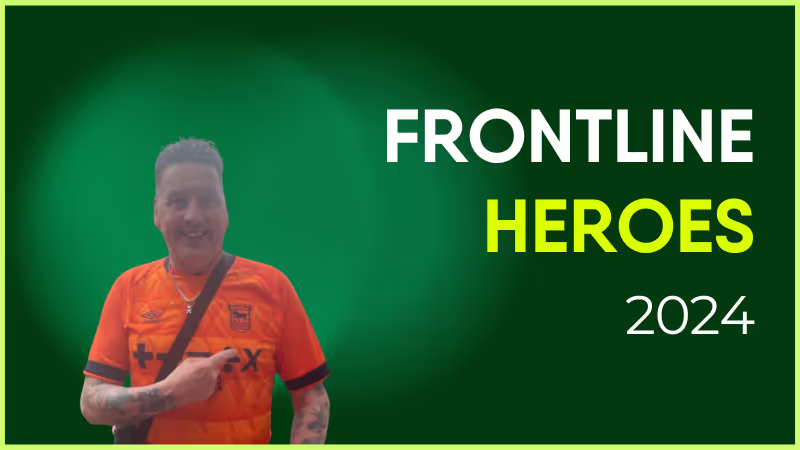
I found the recent Frontline Heroes holiday campaign especially meaningful. It highlighted real stories from frontline workers who use Blink every day, and hearing their experiences was incredibly heartwarming. It served as a powerful reminder of the impact Blink can have on people’s daily lives, and it gave me a renewed sense of purpose in supporting our users on the frontlines.
Why do you work for Blink?
I’m early in my career, and one of the biggest benefits of working at a smaller company like Blink is getting exposure to so many different areas — Marketing, Customer Success, Product — you name it. I love the variety and the fact that I can see the direct impact of my work. Plus, Blink’s mission really resonates with me, so it feels great to contribute to something I believe in every day.
I started here as an Operations Support Analyst under Ana (Mason), which was a fantastic learning experience. But as I took on more analytical tasks, especially around the development of AEI, I transitioned into my current role in Data RevOps. I’m finding it incredibly interesting, and being hands on with such an important product is really rewarding.
Given how much I’ve already learned and how the company is evolving, I see myself staying at Blink for the foreseeable future. It’s a prime opportunity to keep growing, and I don’t want to miss out while I’m still soaking up knowledge at this stage in my career. I’m excited to see what new challenges and opportunities will come as Blink continues to expand.
We’ve rounded up the seven top training programs that will help boost morale, foster collaboration, and increase productivity for your staff. From interactive workshops to online employee engagement courses, these programs offer something for everyone.
Whether your team is new or experienced, office-based or deskless, there are plenty of options available to help create an engaged workforce.
So let's dive into what the best employee engagement training programs are, what they offer, and how they can benefit your organization.
Choosing the best employee engagement training courses
A great employee engagement course should provide teams with a comprehensive understanding of how to create an engaged workplace environment.
It may include a range of topics covering effective communication practices, problem-solving strategies, team-building exercises (that don’t make employees squirm), and more strategies that create highly engaged employees.
They may also offer special features such as a dedicated tutor support service, unlimited online email support, certification upon completion, real-time feedback on learning, resources to help employees create tangible goals and objectives, and interactive tools that can be used in the workplace.
To choose the right employee engagement program for your organization, you should assess and compare who the course is made for and what the content of the course is, alongside the:
Cost
Length
Location
Credit awarded
By assessing these four elements, you can make a more informed decision about which program is best suited to your team’s needs.
What to look for in employee engagement training for managers
Before you can select a training program for managers, it’s important to know what factors to consider for your leadership team. Employee engagement training is essential for even the most high-performing managers, especially frontline managers, as their impact has the unique advantage of cascading effects throughout their entire team.
Cost varies greatly, especially given the number of remote learning and development options available. While eLearning courses are typically more affordable and easily worked into a manager’s schedule, in-person courses offer the benefit of interaction, personalized feedback, and, often, more in-depth practice.
It’s also important to consider whether you, your C-suite, management teams, and HR professionals value certification or credit hours for the time undertaken. The accreditation may add value and incentive for course engagement, as well as the name of the institution offering the training.
Two common HR management organizations that accept credit hours for professional certification are SHRM and HRCI.
You should also consider whether your managers will feel more compelled to complete the learning experience offered by a big name like Harvard to make up for the additional expense.
Additional considerations for choosing an employee engagement program
If you have a frontline workforce, be sure to look for a program that can be easily accessed on mobile devices or through an app with audio lessons available. This will ensure employees can access the course anytime, anywhere, helping you bridge the frontline connection gap.
Additionally, consider the size of your organization and budget. If you have a large team, you may want to look into programs with bulk discounts or offering free training resources. On the other hand, if you’re a smaller business without many resources, eLearning courses may be more cost-effective due to their convenience and lower investment needs.
With digital inclusion now crucial to the modern workplace, it's important to assess the ease of use and accessibility of any courses you choose. Are they easy for team members to access and navigate, or do they require any specific software?
Now that you know what to consider before selecting a program for management let’s go over some of the best employee engagement training programs available today.
The 7 best employee engagement training programs
1. Gallup engagement champions
Workplace advisory and polling group Gallup offers a Creating an Engaging Workplace for Engagement Champions course to help anyone in a leadership position foster a more engaging workplace and support higher productivity.
The course's primary focus is educating higher-level leadership on how to best help their mid-management increase team engagement. There are also practical takeaways for HR professionals or managers themselves.
Cost: $3,000.
Length: Two days.
Location: In-person and virtual.
Credit: The in-person course earns professional credit hours from HRCI (14.5) and SHRM (14.5).
The six-hour course focuses on actions managers can undertake that inspire workers to put forth their greater discretionary effort. The emphasis is on practicing emotional empathy that delivers a long-lasting culture of engagement.
Cost: $699.
Length: Three two-hour sessions.
Location: Virtual.
Credit: It offers professional credit hours — 5.5 HRCI (5.5) and SHRM (5.5).
3. LSA Global
LSA Global’s employee engagement training personalized course focuses on accountability, change-readiness, and engaging purpose (ACE) as the foundation for a greater level of engagement and business clarity.
Cost: Available upon request.
Length: Two-day workshop.
Location: In-person.
Credit: None.
4. DecisionWise
Engagement technology provider Decision Wise offers an online engagement training program called Engagement Magic.
The training covers the importance of employee meaning, autonomy, growth, impact, and connection for engagement and educates learners on fostering these attributes through various employee engagement strategies.
There is a large emphasis on building positive company culture through effective communication and conflict resolution.
Cost: $2,895.
Length: Two consecutive days.
Location: In-person.
Credit: Credit towards Harvard’s Certificate of Leadership Excellence in Leading Teams.
6. eCornell
Cornell’s online educational division strategic engagement course is ideal for managers looking for more training in the quantifiable aspects of employee engagement.
The course teaches methods of measuring employee engagement, like employee engagement surveys, and guides managers through building engagement initiatives to combat disengagement based on organizational data.
Cost: Available upon request.
Length: Two weeks, two-to-five hours per week.
Location: Virtual.
Credit: Credit towards Cornell’s Strategic Human Resources Leadership Certificate.
7. LinkedIn Learning
LinkedIn Learning offers various employee engagement training courses for managers through its catalog of user-generated lessons.
Self-paced pre-recorded lessons like this one on Employee Engagement are a highly accessible training resource for organizations of all sizes.
Cost: $34.99 for a single course or $19.99/month.
Length: Varies.
Location: Virtual.
Credit: Online certification and continuing education credit to SHRM (1.25) and HRCI (1.25).
The value of employee engagement training for managers
According to Gallup’s State of the Global Workplace: 2023 Report, just 31% of employees in the US and Canada are engaged – and that's the second-highest in the world! As such, it makes sense for implementing engagement strategies to be one of your organization’s largest retention priorities.
Typically, most think of across-the-board engagement tactics like benefits, salary, and advancement opportunities. But when it actually comes down to increasing everyday engagement and profitability, as Gallup explains, the best bet is focusing on some of the most critical players in your team: your managers.
They understand each employee’s career goals, strengths, and opportunities for improvement. Managers help shape the culture that can make or break an employee’s experience.
Despite their essential role in increasing the number of engaged employees, few managers are naturally good at navigating the nuances of managing people.
Why? Well, we know that many managers make their way to a management role because of experience in their industry (as practitioners) rather than their experience leading people.
They might be a very experienced warehouse manager, but if they haven't got years of experience managing other warehouse managers, then this kind of training can add a huge amount of value in increasing team-wide employee engagement.
With nearly 70% of frontline leaders expressing interest in developing their leadership skills, a lack of this training can cause growing leadership development gaps in your organization.
On top of this, without training to improve the specific leadership skills required to be a strong manager, there can be potentially disastrous consequences when it comes to engagement and overall employee retention.
In fact, after surveying 3,000 American workers,GoodHire found that 82% of them said they would potentially quit their job because of a bad manager. For that reason alone you may want to consider management employee engagement training as part of your wider L&D efforts.
After all, if you can train managers to increase employee engagement, then you can unlock all the key business benefits that come from having a more engaged workforce, making employee engagement training for managers well worth the investment.
What’s next for frontline managers?
Choosing the right employee training method and investing in the right technology are crucial actions for business leaders wanting to boost engagement.
Hopefully, this guide gave you a better understanding of the considerations to keep in mind when selecting an employee engagement training program and highlighted some of the best ones available today.
After equipping your employees with the right training programs, the next step is to seek the best tools in the industry. Blink’smobile-first frontline engagement super-app is the perfect all-through tool for any organization wanting to boost employee engagement.
With a suite of features designed to connect your entire workforce, Blink can help your business drive optimal performance and engagement from every member of your team.
With Blink’s Content Hub, employees and managers can access any training documents and company procedures from the palm of their hands, making any employee engagement training initiatives more effective and accessible for you in the long-run.
If you’re one of the thousands of organizations using Workplace from Meta to power your internal communications, you’re probably in the thick of figuring out what you need to do next ahead of the Workplace sunsetting beginning in 2025. Researching, selecting, and implementing a Workplace alternative is likely taking up the bulk of your time and energy and may feel like an overwhelming project to tackle.
The good news: With the right platform — and technology partner — you can take the stress out of migration and continue to give employees the intranet features they know and love.
Whatever your vision is for your new platform — maybe a familiar format, or something new and improved — it’s important to get migration right. A smooth migration process can set you up for success and minimize headaches for you and your workforce.
In a recent webinar, Blink’s migration specialists outlined their full 5-step guide to a successful Workplace migration. While we (of course) believe there are lots of benefits to choosing Blink as a Workplace alternative, these steps are relevant to any platform you choose to use.
3 key steps to Workplace migration
Migrating to a Workplace from Meta alternative is about more than moving data from one system to another. A successful migration requires meticulous planning and a launch mindset. It keeps disruption to a minimum and supports a seamless employee experience.
Important steps you need to take when migrating from Workplace include:
Scope and plan the migration
Verify data mapping and reconfigure settings
Activate and engage users
Let’s take a closer look at how these can make or break your migration journey.
#1. Scope and plan the migration
Migrating to any of the Workplace from Meta alternatives available is a huge change — and it’s one you want to get right first time by thoroughly scoping and planning your migration.
Bear in mind that while employee communications platforms tend to have a lot in common, no two tools are identical. There are bound to be differences between Workplace from Meta and your new intranet platform.
To ensure each business function is accounted for, bring together people from across your organization. Discuss platform differences. Gather a wide range of perspectives on platform and migration needs. Also, clarify what you want to achieve with regards to user experience and platform capabilities.
As part of the scoping and planning stage, consider incorporating the following tasks:
Analyze data quality: Take stock of the data you have on Workplace. Are all user profiles activated and complete? Are all groups still relevant? Does your content have contextual elements, like author names and publication dates? Assess which data is complete, which needs to be improved, and which should be deleted or archived.
Review mobile vs. desktop strategy: Consider which data you want to feature on mobile and desktop versions of your platform. For companies with a frontline workforce, it’s wise to include exactly the same data on both mobile and desktop devices — ensuring everyone can enjoy the same great employee experience.
Identify champions and trend-setter groups: To boost early adoption and usage, treat your Workplace migration as a new platform launch. Identify champions and trend-setter groups who will be excited for the new communications hub and encourage peers to join them.
#2. Verify data mapping and reconfigure settings
It can take anywhere from days to weeks to run a migration, with timing depending on:
Your chosen platform
The size of your organization
The volume of data you want to migrate
But as soon as you’ve executed the technical migration, you can begin examining the details of your new platform. The first tasks on the list are verification and reconfiguration.
At Blink, we use our own migration matrix that allows us to clearly map Workplace data and content to corresponding Blink content. However, with any technology switch, it’s always good to be prepared for potential hiccups. Data and settings don’t always transfer neatly to the new platform and post-migration tweaks often have to be made.
To ensure the best user experience post-migration, check that your important data — including user profiles, groups, and knowledge base content — has been transferred correctly, imperfect data has been updated, and settings have been reconfigured as needed.
User profiles
Review the user profiles that have been transferred from Workplace. Check that all details — like names, roles, and profile pictures — are correct. Delete any duplicate users. Also, verify that your organizational hierarchy has transferred correctly, with the right employees assigned to the right managers.
This is a good opportunity to check the permissions and notification settings associated with each user profile. Do this during the verification process and you won’t have to revisit each user profile to make changes later.
Groups
Look at the groups that you’ve migrated over from Workplace. Check that their names are correct. View members and admins to ensure nothing has gone awry during the switch.
You should also take the time to look at dynamic team membership rules to ensure that employees are automatically assigned to relevant groups going forward.
Knowledge base content
To ensure a consistent employee experience, it’s important that users can access the resources they need as soon as they log in to your new internal communications platform. Check that content is in the right place and that users will be able to find it easily. Confirm that all contextual information, including author names and publication dates, is visible and correct. Review permissions for publishing, editing, and sharing rights.
And don’t forget about formatting: Check headings, double-check hyperlinks, and make sure your multimedia content, such as videos and images, looks good and works well.
#3. Activate and engage users
If you’re at this step, it means you’re ready to launch your new intranet to the workforce. Congratulations! To maximize engagement and encourage adoption, you’ll want to give employees an incredible experience on your new platform starting day one.
Decide how you’ll build buzz around the incoming platform. That may mean notifying employees that your new intranet is imminent and incentivizing them to log in on launch day. You can consider running giveaways, creating gamified experiences, or planning a launch party — all with the goal of boosting in-platform engagement.
Remember that you’re launching a social platform: Creating an immediate sense of active community will be the difference between delight and disengagement. By going live with a published backlog of engaging content, employees can be welcomed to the new platform with a lively and pre-populated news feed.
Education is another important part of the puzzle. Help employees get the most from your new solution through training sessions, Q&A forums, and dedicated support channels.
This is also a great time to promote the internal champions and trend-setter groups you identified earlier in the migration process. These ambassadors can spread the word about your new platform, drive activation, and offer support where it’s needed.
{{mobile-activation="/image"}}
Making your Workplace migration successful
Whether you want employees to instantly feel at home or are relishing the opportunity to start afresh, a clear migration plan can help you minimize disruption and keep the company conversation flowing during the transition from Workplace to your new company hub.
By starting the process with a thoughtful migration plan and ending it with a robust rollout strategy, you can supercharge employee adoption on day one and drive engagement long past launch day.
For our full 5-step guide to making migration easy on you — and your workforce — download our on-demand webinar: From Workplace to Blink: Migration Made Easy for actionable advice helpful for any organization exploring alternatives to Workplace.