















Your comms are written for everyone. Now they reach everyone.

Blink gives every frontline team member one place to find the announcements, policies, and documents they need — lifting readership, reaching people with no work email address, and showing you exactly who read what.
Cork bulletin board with maps, charts, and a Malcolm Logistics calendar pinned on a beige wall.
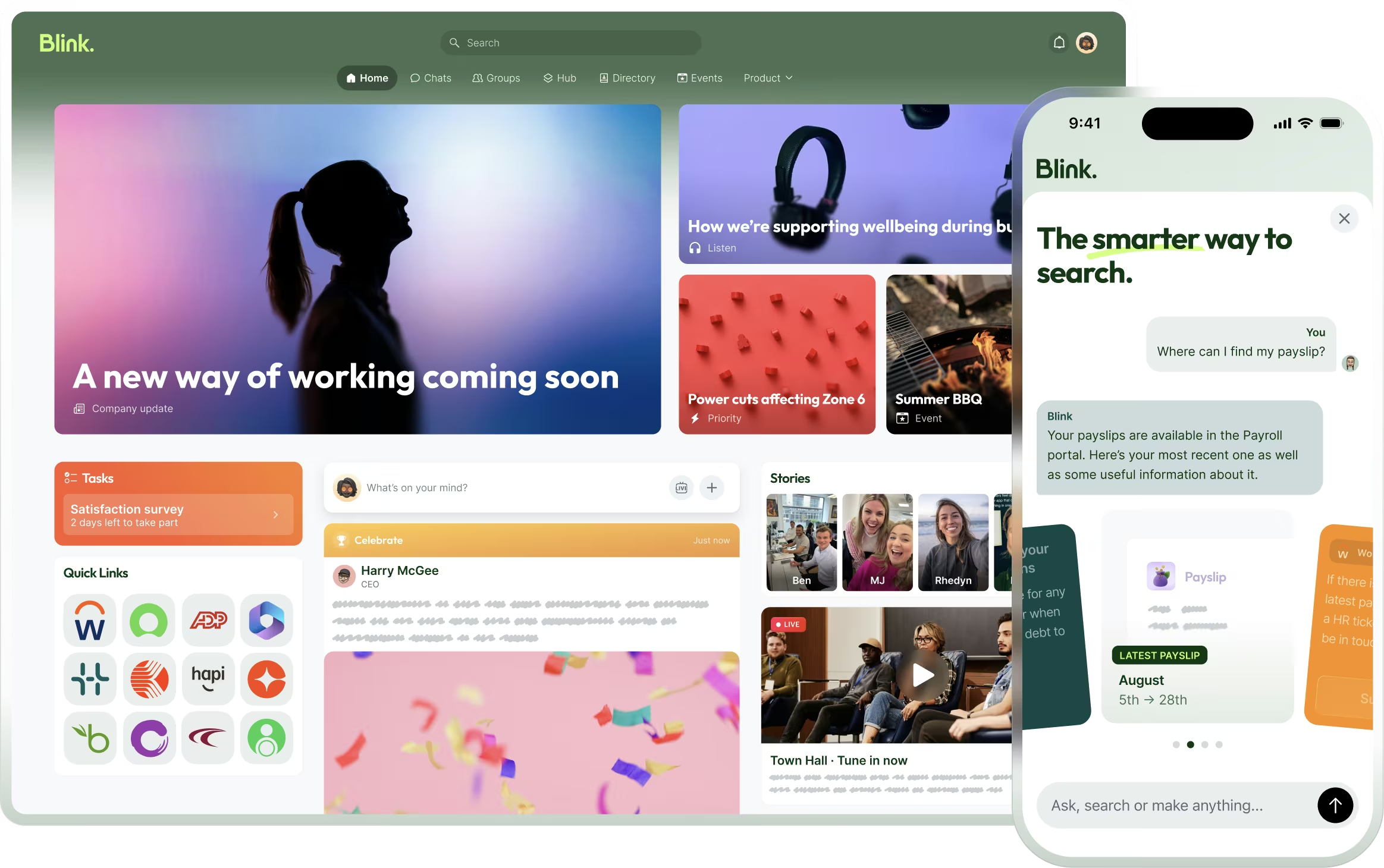
Screenshot of Blink platform on desktop and mobile showing a live company event video with diverse group embracing, trending topics, and story sharing features.
“Bringing Blink into our ecosystem for our technology transformation gives us the platform that we need to make that frontline worker experience much more simple. [...] It’s helping the organization come together as one.”
Woman in blue scrubs intently looking at a screen, with an office background.

You sent it to the whole company. How much of the company read it?

Internal communications carries the safety notice, the policy change, the CEO's message, and the reason people stay. In a frontline organization it travels across sites, shifts, languages, contract types, and countries, to people who do their jobs nowhere near a desk.

When an announcement doesn't reach people on their phones, it reaches them through their managers, who deliver it in their own words in the middle of a shift.

Blink closes that gap by putting the announcement on the personal phone of every person on the audience list, and showing you who opened it.

Reach is what turns an announcement into action on the frontline

Blink is internal communications software for frontline teams: a frontline communication app where the announcement, the acknowledgment, and the read data sit in one place.
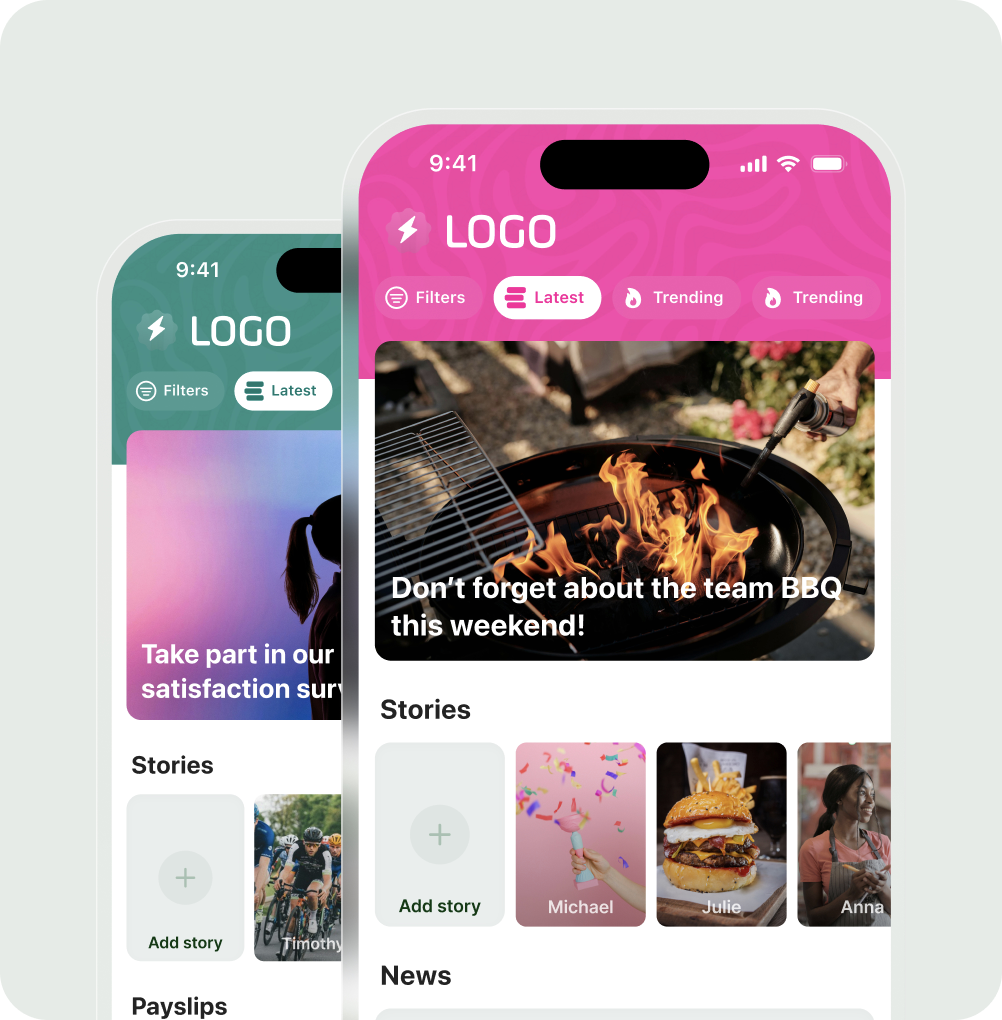
Two smartphone screens showing a social app interface with a BBQ event announcement and stories featuring images of people, confetti, a burger, and a woman.

One app for everything your comms team publishes

Blink brings a comms program into one app: the Feed for announcements, Stories for video, the Hub for policies and documents, Critical Communications for must-read notices, and analytics for readership. Every post reports who opened it.

Blink is built for organizations where most people work away from a desk, including McDonald's, easyJet, and Booking.com.
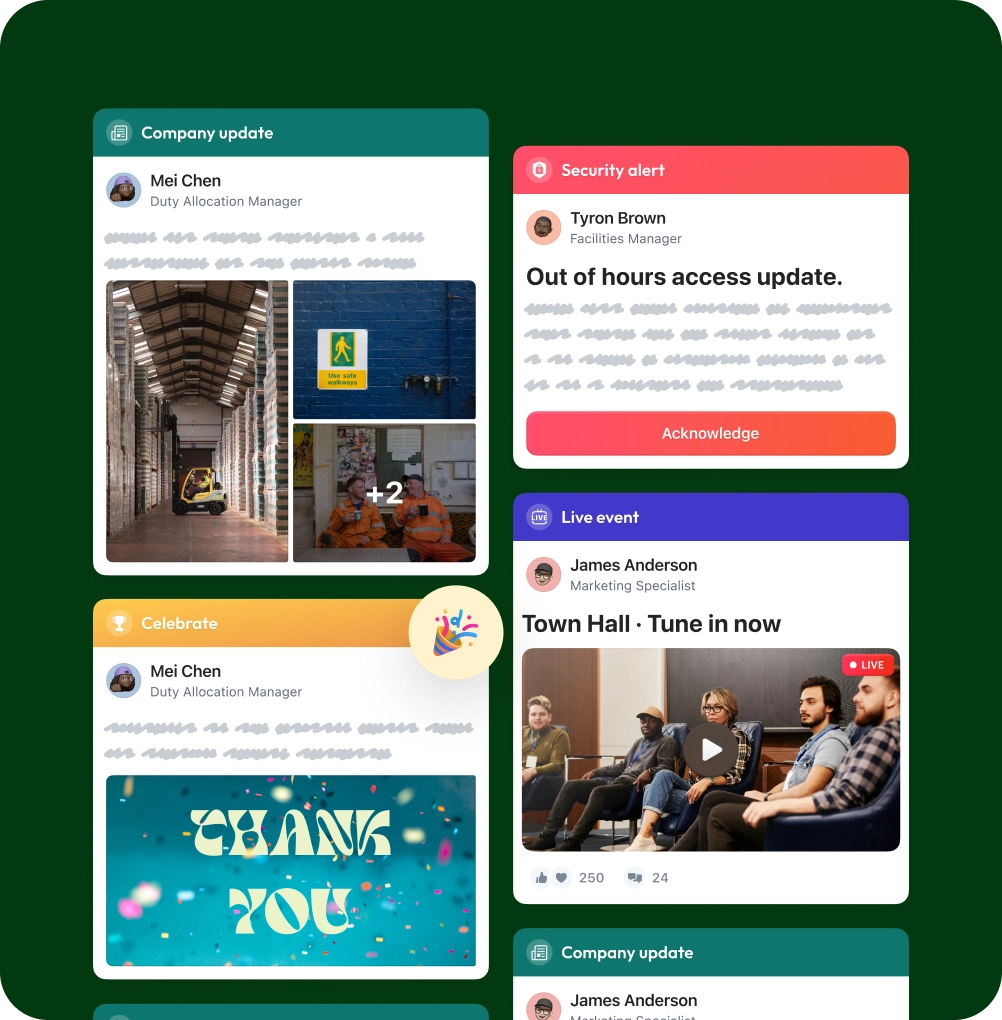
Dashboard showing company updates, security alert, celebration message, and live event with images of employees, a warehouse, safety sign, and a Town Hall meeting.

Reach people who don't have a work email address

People activate Blink on their own phone. A manager sends the invite through manager-led activation, the person taps it, and they are in: no company device, no corporate mailbox, no IT ticket. That makes Blink an employee communication app without email. Across healthcare customers, 95% of workers activate within their first week.
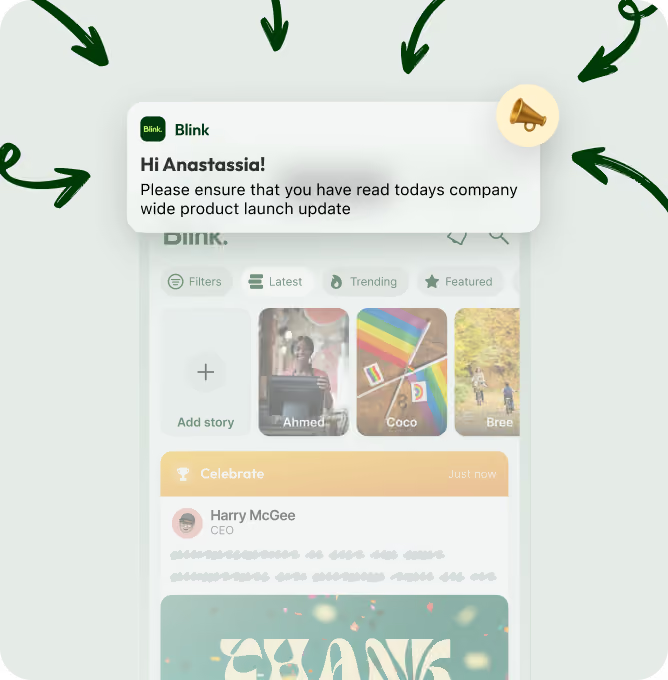
Target by site, shift, role, or language

Audiences are built from your people data, so a post goes to one site, one shift, one job family, or one country. People read it in their own language: Blink translates posts into 100+ languages, and Blink Assist helps your team draft and edit before anything goes out. Multilingual internal communications becomes a setting, not a project.

See who read it, by site and by shift

Every post in Blink reports who opened it. Blink's analytics show readership by site, region, and job family, so the monthly readership report takes minutes rather than a week of chasing. Use it to measure internal communications against a target and show the exec team where reading is strongest.


Frequently asked questions

How can you improve internal communication?

How to improve internal communication depends on factors like the state of your business’s current internal comms as well as where you want to go. But companies with great internal communication all have one thing in common: they identify a specific comms challenge within their company and look for a tool or strategy to solve it.

Analyzing what is and isn’t working is the first step. When you know what internal comms issues are impeding effective collaboration and stalling productivity, you can identify the right tools and strategies to remedy the situation.

In today’s digital world, internal comms needs to focus on engagement to be truly effective. This means incorporating internal communications strategies such as:

  • Using communication tools that work for everyone
  • Prioritizing communication and engagement
  • Involving all employees at every level
  • Hosting an internal communication blog
  • Keeping lines of communication open
  • Giving frequent feedback
  • Having fewer meetings
  • Investing in a communication platform
  • Adopting a more integrated approach to internal comms
  • Using more productive comms strategies
  • Tracking how employees using comms tools
  • Running training and workshops to improve manager to employee communication

Creating your own internal communication strategy is a big task, but you can look to [companies with great internal communication](https://joinblink.com/blog/11-companies-with-great-organizational-communication-and-how-you-can-follow-suit) to emulate their strategies in your own planning.

What types of internal communication are there?

Internal communication encompasses any information created for and intended for employees only. There are endless examples of internal communication, and plenty of internal communications best practices to swot up on. These range from annual reports, benefits programs, emails, and face to face meetings to manager toolkits and surveys.

Why is exploring internal communication important?

Internal communication is a critical part of any organization’s operations.

Businesses with strong internal communication in the workplace have more engaged, more productive, and happier employees. Strong internal comms is also linked to less employee turnover, which means businesses who prioritize internal communication often make more money as a result.

Employees want internal comms too. In fact, studies show that employees (whether in office, remote, or deskless) rank frequent and effective employee communication as one of the top behaviors that creates a positive experience at work. The same study also reveals that internal communications managers consider open communication to all employees “one of the top initiatives they would like to see their organizations focus on.”

At the end of the day, effective internal comms pays off, with companies with highly engaged workforces outperforming their competitors by 147% in earnings

What is internal communication?

Internal communication is defined as the sharing of information within a business or organization. This extends to sharing ideas, internal comms strategies, and values as well.

While there are lots of ways to define internal communication, the ultimate purpose of internal comms is to help a business or organization achieve its objectives effectively. This goes beyond telling employees what to do; the role of ic (internal comms) is about creating a shared meaning and understanding so employees work together to achieve the same goal.