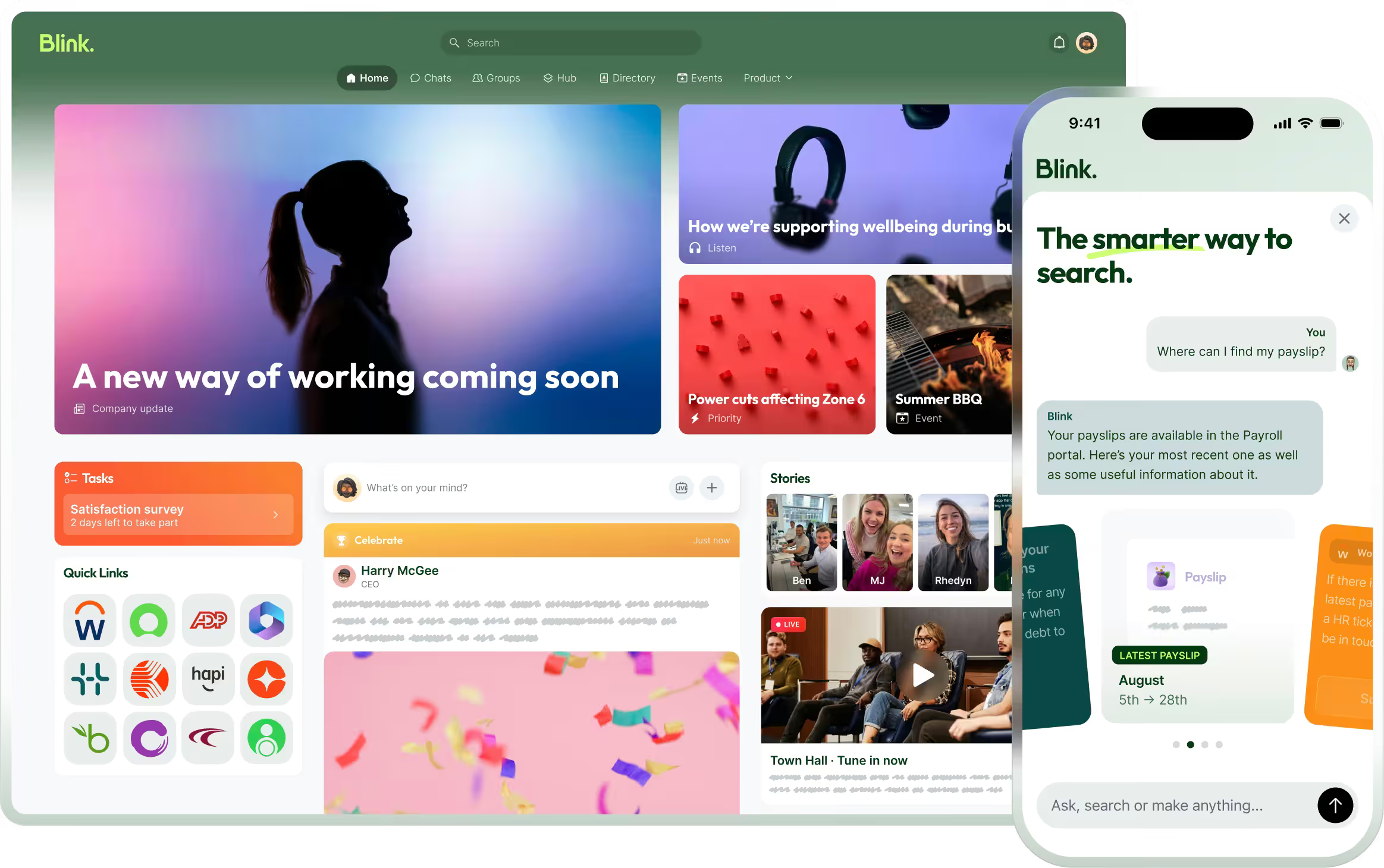

A complete guide to mobile workforce management for those managing newly remote and hybrid teams, as well as more traditional mobile workforces.
Jess DeVore
Published:
September 6, 2023
Last updated:
October 8, 2024
If you’re new to mobile workforce management, you’re not alone.
Before the pandemic, just 6% of the employed workforce worked from home. Now, 74% of US companies are either operating on a hybrid working model or plan to do so in the future. Businesses that previously did not need mobile workforce management strategies are now rapidly trying to figure out what works when your team is scattered across multiple locations.
If that’s you, don’t panic. With the right tools and approach, it’s possible to run an effective mobile workplace, without compromising on productivity. Here’s how.
What is mobile workforce management?
IBM defines a mobile workforce as “a group of employees that isn’t bound by a central physical location. Instead, the employees are connected by various types of mobile technology: computers, smartphones and other mobile devices.”
This includes – but isn’t limited to – remote desk-based teams who might have worked in a centralized office pre-pandemic. It could also include:
Community healthcare teams who visit outpatients during working hours
Drivers – whether for public transport, taxi or private logistics fleets
Traveling sales teams, who spend part of their time visiting clients, conferences and trade shows
Teams of engineers, tradespeople or contractors who attend different clients each day
Mobile workforce management is simply the process of managing these teams so that they’re as effective, efficient and engaged as possible. The three ‘e’s, if you like.
The differences between the mobile and the standard workforce
Traditionally, a ‘standard workforce’ is based on physical location. You might have an office HQ that your employees commute to each day or a manufacturing plant that needs to be manned 24/7, for example.
Thanks to the wave of remote and mobile working brought on by COVID-19, things aren’t as clean-cut as they once were. Mobile workforce management is now a major consideration for desk-based teams as well as more traditionally mobile workforces.
In terms of how you approach managing your teams, this means:
You’ll need to use mobile workforce management software to run your team effectively
You’ll need to be mindful of differences across time zones when scheduling calls or arranging deadlines
The principles of good management still hold. A transparent and fair approach to managing your team is still a great foundation to work from – you just might have to incorporate a couple of extra tools for maximum effect!
The benefits of mobile workforce management
The benefits of a strong management strategy remain the same across both mobile and traditional workforces:
Increased productivity: teams get more done in the same amount of time
Improved visibility: managers provide insights into how your business works day to day
Improved customer experience: good managerial support allows your employees to offer a great customer experience through building skills and retaining talent
Improved employee engagement: employees feel supported by management and engage more with the business as a result
Mobile workforce management specifically – when done right – offers two key benefits besides.
Firstly, you’re no longer bound by geographic location when hiring. This opens up a vastly wider talent pool that you can draw from – especially useful at a time when competition for new employees is at an all-time high.
Secondly, flexible working is a hugely attractive benefit to offer new and existing employees. Nearly all (97%) respondents in Buffer’s 2022 State of Remote Work survey said they wanted to work remotely at least part of the time for the rest of their career.
Trends and challenges shaping mobile workforce management
Some of your employees are onsite. Some of them are remote or on the move. How do you collaborate in such a seemingly fragmented team?
This has been one of the major issues about mobile workforce management in the post-COVID era. Whilst the majority of businesses want to implement some sort of hybrid working arrangement, 63% of employees say that their company has not made any major changes to make this easier.
If your working model has changed, your processes need to change too.
One trend that’s becoming increasingly popular is a remote-first approach to work. This means that you run your entire team as if fully remote, by having all meetings via video conferencing software, for example.
The result is that everyone feels included and can interact on the same level – you remove the awkward atmosphere created by having some people meeting in person with others phoning in via a conferencing system.
Manage your mobile workforce
Getting started on mobile workforce management? Here are some tips.
Use the right software
Mobile workforce management is 100% reliant on using technology to communicate and collaborate, so having the right tools can make all the difference! An employee app to help you get messages across is essential, and you should also invest in a strong project management tool (e.g. Trello, Asana, Basecamp) at a minimum.
There are many different types of mobile workforce management software that you can use to make managing your teams easier. We’ve included a guide at the end of this article to help you get started.
Check in…but don’t micromanage
Daily check-ins are a must when your team is on the move or scattered across different locations. It’s all too easy for these to slip into micromanagement if you frame them wrong.
By all means ask for updates, but avoid listing ‘must-do’ tasks or demanding constant micro-updates on progress. Instead, ask if there’s anything you could be doing to support your employee, or if there’s anything they need assistance with. Check-ins are as much about offering support as they are about task updates.
Constant communication, not necessarily on topic
How much of your traditional office chat was work based? Inane office chatter – pets, the kids, weather, vacation plans – actually serves a valuable purpose in team bonding and making social connections across the company.
Use channels on your messaging app to provide a virtual space for this. You’ll find your team works better together as a result. Your remote and mobile workers start to feel more like a part of the wider organization, and engage more as a result.
Mobile workforce management software
Employee apps and mobile intranet (e.g. Blink)
Mobile-first employee experience apps are vital for day-to-day communication between team members as well as employee recognition, networking and engagement. ‘Mobile first’ is a must here – if your employees don’t have 24/7 access to a desktop, you need to be able to spread key messages via smartphone.
Provide a single point of reference for tasks and deadlines with an online project management tool. Choose from a variety of project views to suit your team, with automated notifications and reminders when a deadline is approaching.
Remote collaboration tools (e.g. Google Docs, Miro, Microsoft Teams)
Unlock your team’s creativity with a range of collaboration tools. Video conferencing is an absolute must-have, as is some form of collaborative document tool – Google Docs is by far the most intuitive here. For visual projects, virtual whiteboard tools are a particularly handy tool for online collaboration.
Mobile scheduling tool (e.g. Deputy, RotaCloud, Blink)
If your teams work in shifts, rota management is a must. Mobile rota management and scheduling apps save you hours by automating this process, and your employees will get instant updates if the rota changes. Eliminate misunderstandings and never be accidentally short staffed again!
Performance management is as important in a mobile setting as it is in a traditional work environment. Give your managers the tools to give feedback, run appraisals, manage employee goals and more with an extensive performance management solution.
A few final thoughts on mobile workforce management
Mobile workforce management doesn’t have to be a huge departure from your existing management strategy. Open communication, respect and approachability will get you some of the way there on their own.
It does, however, mean that you need to support employees across more than one different location though. And this means that finding the tech that works for you is essential in keeping everything running smoothly.
Spend time thinking about your requirements here, and don’t rush into any purchases, no matter how urgent they may seem. Being locked into an unsuitable contract will cause a lot more damage in the long term than waiting to find the right software for you.
AI is already a familiar part of many desk-based jobs. Now, its potential is reaching much further - into classrooms, clinics, retail stores, manufacturing facilities, and other frontline workplaces.
For frontline workers, that shift could be especially valuable. The right tools can make everyday work simpler, reduce time spent on admin, and give employees more space to focus on the people, decisions, and hands-on tasks that need them most.
Where people work can also influence how quickly that change happens. Cities with a strong base of AI expertise, growing job opportunities, and high local interest can create the conditions for new tools and skills to spread across a wider range of workplaces.
To find the workforces leading the way, Blink analyzed 100 frontline occupations across expected AI use, AI task exposure, projected job growth, and search interest. We also ranked 100 mid-sized U.S. cities based on AI job opportunities, their concentration of tech and AI employment, local search interest, and recent employment growth.
Together, the results reveal which frontline occupations are most prepared to embrace AI, and which emerging U.S. cities provide the strongest environment for workplace adoption.
The most AI-optimistic workforces in the U.S.
AI is beginning to play a role across a wide range of frontline occupations, from classrooms and clinics to stores and manufacturing facilities. We analyzed 100 occupations based on expected AI use in their primary industry, current AI task exposure, projected job growth, and search interest to find those best positioned to embrace the technology.
1. Counter and rental clerks
Counter and rental clerks rank as the most AI-optimistic frontline occupation in the U.S., with an overall score of 61.8. The role recorded 33,460 searches related to using AI, the highest search interest in the study, alongside an AI task exposure rate of 20.5%. With 26.6% of businesses in the occupation’s primary industry expected to use AI, the findings suggest workers are already exploring how the technology could support customer service and make everyday admin more efficient. For example, AI could help with routine customer queries, booking administration, and checking product or vehicle availability.
2. K-12 teachers
K–12 teachers rank second with a score of 55.7. Educational services have the highest expected AI-use rate among the leading occupations, at 35.3%, while teachers recorded an AI task exposure rate of 20.7%. Despite employment being projected to fall by 1.8% between 2024 and 2034, the results suggest teachers are already exploring how AI could support their work in the classroom. Potential uses include supporting lesson planning, creating classroom materials, and reducing time spent on routine administrative tasks.
3. Occupational therapy assistants
Occupational therapy assistants rank third with a score of 53.5. Employment in the profession is projected to grow by 19.2% between 2024 and 2034 - the strongest growth of any occupation in the study. Searches related to using AI also reached 12,460. Although no AI task exposure was observed in the source data, the profession’s rapid growth and high search interest suggest there is strong curiosity about how AI could support the role in the future. For example, AI could help with clinical documentation and suggest personalized activities based on a patient's needs and progress, while leaving care decisions to trained professionals.
4. Retail salespersons
Retail salespersons rank fourth with a score of 48.8. The role recorded an AI task exposure rate of 32.2%, the highest among all 100 occupations analyzed. While projected job growth and search interest were more modest, the results show that AI is already finding practical uses in customer-facing retail work. For example, AI could help employees answer product questions, check stock availability, and find the information customers need. As technology continues to shape the sector, giving retail employees easy access to the right tools will help ensure frontline workers benefit from it, too.
5. Home health aides
Home health aides complete the top five with a score of 47.7. Employment is projected to grow by 17% over the next decade, while 24.9% of businesses in health care and social assistance expect to use AI. No direct AI task exposure was observed, but the combination of strong job growth and wider adoption across the healthcare sector puts home health aides among the occupations best positioned for future AI use. In practice, AI could help aides manage schedules, complete care notes, and flag changes in a patient’s routine or condition for review by a healthcare professional.
6. Medical assistants
Medical assistants rank sixth with a score of 47.0. The role combines projected job growth of 12.5% with an AI task exposure rate of 4.8%. With almost a quarter of businesses across health care and social assistance expected to use AI, medical assistants could increasingly encounter the technology as part of their everyday work. In practice, AI could support administrative tasks such as appointment scheduling, patient intake, and clinical documentation.
7. Physical therapists
Physical therapists are in seventh place with a score of 42.0. Employment is projected to grow by 10.9% between 2024 and 2034, while the role recorded an AI task exposure rate of 1.7%. Its position reflects a fast-growing profession within a healthcare sector where AI adoption is expected to increase. AI could support physical therapists by analyzing movement, tracking rehabilitation progress, and helping tailor exercise plans, while treatment decisions remain with trained professionals.
8. Respiratory therapists
Respiratory therapists rank eighth, also scoring 42.0. The occupation is projected to grow by 12.1% over the next decade and recorded 1,650 searches related to using AI. Although no direct AI task exposure was observed, strong employment prospects and wider expected AI use across health care help lift the role into the top 10. In practice, AI could support clinical documentation, scheduling, and the review of patient data, while leaving care decisions firmly in the hands of trained professionals.
9. Industrial machinery mechanics
Industrial machinery mechanics rank ninth with a score of 41.4. Employment is projected to grow by 16.1% between 2024 and 2034, making it one of the fastest-growing occupations in the top 10. Its position shows how AI optimism is reaching hands-on technical roles. In practice, mechanics could use AI to identify potential equipment faults, anticipate maintenance needs, and reduce unplanned downtime. The result shows that manufacturing employees are also exploring how AI could improve productivity and support workers on the floor.
10. First-line supervisors of retail sales workers
First-line supervisors of retail sales workers complete the top 10 with a score of 41.2. The role recorded an AI task exposure rate of 26.3% and 11,350 searches related to using AI - both among the highest results in the ranking. Despite employment being projected to decline, the findings suggest retail supervisors are already considering how AI could support the teams and day-to-day operations they manage. Potential uses include shift planning, routine reporting, and sharing operational updates across stores.
The most AI-optimistic cities in the U.S.
While the occupation ranking explores AI readiness across frontline roles, the city ranking looks at the wider environment supporting workplace adoption. It considers local AI expertise and job opportunities alongside search interest and employment growth. This means established technology centers can rank alongside emerging cities, even though the occupations using AI may look very different in each place.
1. Sunnyvale, California
Sunnyvale ranks as the most AI-optimistic city in the U.S., with an overall score of 82.3. The city has an exceptionally high concentration of tech and AI employment, recording a location quotient of 3.91 — the highest among the top 10. It also has one of the largest shares of AI-related job postings in the ranking, at 0.71%.
While its position in Silicon Valley is central to the result, the ranking captures the wider environment for workplace AI rather than frontline adoption alone. Sunnyvale’s combination of specialist expertise, job opportunities, and an established technology ecosystem creates strong conditions for AI adoption across different industries.
2. Tacoma, Washington
Tacoma ranks second with a score of 61.9. Its position is supported by a tech and AI employment concentration 2.76 times the national average, alongside a 0.39% share of job postings related to AI. Local interest is growing, too, with 1,270 searches for AI workplace topics. Together, these results show that AI momentum extends beyond the country’s best-known tech centers.
3. Fremont, California
Fremont ranks third with a score of 60.9. The city has a 0.71% AI job-posting share, tying with Sunnyvale and Hayward for the highest among the top 10. It also benefits from the wider San Francisco Bay Area’s strong concentration of tech and AI employment. With 1,450 searches for AI workplace topics, Fremont’s workforce isn’t just surrounded by AI opportunities; people are actively exploring how the technology could shape their work.
4. Bellevue, Washington
Bellevue ranks fourth with a score of 60.3. Like nearby Tacoma, it records a tech and AI employment concentration 2.76 times the national average, along with an AI job-posting share of 0.39%. These figures help Bellevue strengthen Washington state’s presence near the top of the ranking and highlight the broader Seattle area as an important center for AI skills and employment.
5. Hayward, California
Hayward completes the top five with a score of 59.0. Its 0.71% AI job-posting share is among the highest in the study, while the wider San Francisco-Oakland area has a tech and AI employment concentration nearly twice the national average. Combined with 1,150 searches for AI workplace topics, the city’s access to both opportunity and expertise makes it another Bay Area workforce well positioned to embrace workplace AI.
6. Spokane, Washington
Spokane ranks sixth with a score of 57.0. Its AI job-posting share is lower than the cities above it, but a strong concentration of tech and AI employment helps it stand out. Employment also grew by 0.84% between May 2025 and May 2026, the strongest growth among the three Washington cities in the top 10. Spokane is further evidence that an AI-ready workforce doesn’t have to sit within a traditional coastal tech hub.
7. Salt Lake City, Utah
Salt Lake City ranks seventh with a score of 53.0. It recorded 2,050 searches for AI workplace topics, the second-highest level of search interest among the top 10. The city also combines an above-average concentration of tech and AI employment with modest recent employment growth, pointing to a workforce that is both curious about AI and increasingly equipped to use it.
8. Arlington, Virginia
Arlington ranks eighth with a score of 53.0. No other top-10 city recorded more searches for AI workplace topics, with local search interest reaching 2,390. Its tech and AI employment concentration is also more than twice the national average. Although employment fell by 2.6% between May 2025 and May 2026, the city’s established expertise and strong search interest still help it place among the most AI-optimistic workforces in the U.S.
9. Cary, North Carolina
Cary ranks ninth with a score of 52.3. The city combines a 0.34% AI job-posting share with a tech and AI employment concentration 1.74 times the national average. Employment also grew by 0.49% between May 2025 and May 2026. This balance of job opportunities, specialist skills, and continued growth helps make Cary one of the strongest emerging AI workforces outside the West Coast.
10. Columbia, South Carolina
Columbia completes the top 10 with a score of 50.7. The city recorded employment growth of 3.13%, the highest of any city in the top 10, alongside 1,550 searches for AI workplace topics. While its concentration of tech and AI employment is more modest, its pace of growth suggests the city could play a bigger role in America’s AI-powered working future.
What America’s most AI-optimistic workforces have in common
There’s no single route to becoming an AI-optimistic workforce. Established tech hubs like Sunnyvale and Bellevue rank alongside growing cities such as Cary and Columbia, showing that the conditions supporting workplace AI aren’t limited to the places traditionally associated with technology.
The same is true of the occupation ranking. Customer-facing, healthcare, education, retail, and manufacturing roles all appear near the top, suggesting that workplace AI has potential far beyond desk-based jobs. Some occupations stand out because AI is already becoming part of their everyday tasks, while others are supported by strong job growth or growing interest in how the technology could be used.
Commenting on the findings, Jack Westerman, Applied AI Lead at Blink, said:
“The findings show that AI readiness isn’t confined to one type of role or one part of the country. What matters now is turning that momentum into tools that solve real problems for frontline workers, whether that’s finding information faster, reducing admin, or making everyday tasks simpler. For employers, successful adoption will depend on introducing AI in a way that fits how their people actually work”.
Turning that potential into something useful means meeting frontline workers where they are, including people working across retail stores, manufacturing sites, and hospitality shifts. Blink AI brings AI directly into the frontline experience, helping teams spend less time searching for information and completing routine tasks, and more time on the work that needs a human touch.
Methodology:
To identify the most AI-optimistic workforce in the U.S., Blink analyzed 100 frontline occupations across four factors: expected AI use in their primary industry (25%), AI task exposure (30%), projected job growth from 2024 to 2034 (35%), and search interest for “[occupation] using AI” (10%).
We also ranked 100 mid-sized U.S. cities with populations of 250,000 or fewer based on the share of AI-related job postings (20%), the concentration of tech and AI employment (35%), AI workplace search interest (15%), and employment growth between May 2025 and May 2026 (30%).
Each factor was normalized to a score between 0 and 100 before the weighted scores were combined to produce separate occupation and city rankings.
Occupation data was sourced from the U.S. Census Bureau’s Business Trends and Outlook Survey AI Supplement, the Anthropic Economic Index, the U.S. Bureau of Labor Statistics, and Keywordtool.io. City data was sourced from the University of Maryland–LinkUp AI Maps Project, the U.S. Bureau of Labor Statistics, Keywordtool.io, and World Population Review.
Expected AI use was measured at the industry level, with each occupation assigned to its largest-employing industry. Most city metrics were measured at the metropolitan level, meaning cities within the same metro share certain values. AI job-posting data covers July 1–31, 2026.
The occupation and city rankings were calculated separately. Data is accurate as of August 14, 2026.
More than 80% of the global workforce is deskless. That's more than 2.7 billion people working outside of a traditional office setting, making it more important than ever to have effective communication tools in place.
This guide is designed to help business leaders keep their deskless employees connected and communicating, no matter where they are. We'll cover a variety of topics, from why communication is so important (and often challenging!) for deskless workers, to how to choose and evaluate digital communication tools to engage your deskless workforce with ease.
Why communication is important for deskless workers
With such a strong majority of the global workforce that is deskless, purposeful corporate communication solutions are crucial. This means ensuring all employees feel connected, in-the-loop and heard - even as a deskless team. As such, there are a number of reasons effective employee communication is important for frontline workers and their wider teams.
1. Reduces turnover
With the Great Resignation still in full swing, all business leaders need to be focusing on employee retention. This becomes even more prominent for the deskless workforce, with52% of frontline workers claiming they would leave their job over tech tools in 2022.
Additionally, according to a survey of 8,000+ global frontline workers and C-suite executives, 45% of frontline workers were planning on leaving the frontline altogether this year.
With most corporate communications tools not designed for them and frontline engagement projects lacking in substance, deskless workers are showing high turnover rates and low job satisfaction, creating an unstable workforce for your business.
Effective communication can improve job satisfaction by creating a sense of community and increasing transparency from leadership. This also helps to reduce misunderstandings and conflicts among employees, leading to better employee retention rates.
2. Increases profits
Better communication means better engagement. Indeed tells us that improved communication works to connect and keep open lines of communication between employees and other members of the organization, which ultimately works to create better engagement between employees. But did you know that this can have a further positive impact on your company profitability?
Engaged employees, who feel heard, valued and involved in communications, are more productive, and this increased productivity can often result in a more profitable business.
As we highlighted in our recentEmployee Engagement Statistics Guide, highly engaged organizations achieve a 23% difference in profitability, alongside a 43% difference in turnover. By driving home your employee engagement with impactful, intuitive communication, you’re investing in the success of your deskless workforce, and the long-term success and overall profitability of your business.
3. Drives employee experience & empowerment
Deskless workers often have limited access to traditional channels of communication, such as email or company intranet. Providing alternative means of communication, such as mobile apps designed for the frontline, can help improve the employee experience by giving them a voice and empowering them in their work environment.
This also allows for agile, on-the-go, two-way communication that deskless employees need in their fast-paced work environments, which is where communications for deskless workers often fall short.
Better employee experience can also boost your bottom line. HBR research shows that a shift in employee experience would result in a 45% increase in profits per person-hour, adding significantly to both individual, team and overall company success.
4. Increases productivity & organization
Effective organizational communication can increase productivity by reducing miscommunications and streamlining processes. It also allows for better frontline organization, as employees have access to important information and updates in real time.
This helps deskless workers stay on top of their tasks and responsibilities, leading to more productive employees and a more organized frontline.
Without efficient two-way communication solutions, it can be difficult for business leaders to understand, or even acknowledge, the issues their frontline workers are facing. For example, did you know that70% of frontline workers have either suffered from burnout or felt at risk of burning out?
With great team communication, your leaders can hear and respond directly to workers needs, implementing them into their organizational practices.
Whether that means giving employees an intuitive two-way communication solution such as a mobile employee app, an accessible scheduling tool to prevent miscommunications or an easier way to organize shift swaps, effective communication can improve the productivity and organization of your workforce.
5. Boosts trust, engagement & morale
A lack of communication can lead to a disengaged and distrusting workforce, as employees feel isolated and disconnected from the larger company culture.
Research shows that nearly all (99%) of C-suite executives believe their frontline workers trust them, while only a quarter (26%) of workers entirely trust their organization to communicate company updates and news transparently.
Clearly, as part of the C-Suite it's important to understand how purposeful internal communications help to build a sense of community among deskless workers. By increasing transparency from leadership, you can drive employee engagement long-term. In turn, this can improve overall job satisfaction, minimize churn and build trust with your workers.
6. Improves worker safety
Proper communication can also improve safety in the workplace. Problems with communication leading to major accidents/incidents are well known, according to HSE.
Proper frontline communication includes informing deskless employees of important safety updates, as well as providing a platform for reporting concerns or hazards. In turn, this can lead to a better quality of work and decrease the likelihood of accidents or injuries on the job.
The Blink frontline engagement app offers a central Hub for storing core company policies, procedures and training documents, ensuring all teams have access to important information and updates in real time. It also includes Secure Chats, giving frontline employees the ability to report concerns or hazards directly to management for swift resolution.
The challenges of communicating with deskless workers
While the benefits are great, it can be a huge challenge to communicate with deskless workers in the modern work environment. Some key challenges of communicating with deskless workers include:
Budget: When you're under-budgeted and under pressure, finding the right communication channels and tools for your deskless workers can be a complex and costly process for business leaders that don't know where to invest.
Old software or no access to tech: Deskless workers may not have access to the same technology or software that office-based employees do, leading to communication disconnects, especially when using tech not designed for them.
Implementing new software: Introducing new communication software can also be a challenge, requiring dedicated training and support to ensure adoption and success for your deskless teams.
Easy access to the right information: Deskless workers often require easy access to essential information, such as company updates, product knowledge or HR policies. Without proper communication channels in place, there can be a breakdown in sharing important information with these teams.
Disconnected, disengaged & distributed: With teams spread across various locations, it can be difficult for deskless workers to feel connected and engaged with the company and their coworkers. Effective communication helps bridge this disconnect.
No sense of community or belonging: Deskless workers may not have the same office community or team spirit as traditional office-based employees, making it crucial for businesses to find ways to build a sense of belonging and connection within their remote or distributed teams.
So – how can leaders overcome these challenges and drive stronger communication between their employees? Let’s take a look.
How to improve communication with deskless workers
Build a digital culture
The pressure’s on for leaders in the frontline sector to digitize their communication efforts with deskless employees. As such, many companies are now developing digitalization strategies that enhance employee experience and drive performance.
One key to business success in a post-Covid world is to embrace a digital culture.
For digital culture to be successful, it must be driven from the ground up.
Clearly, it's important for business leaders to embrace a digital culture, with communication tools and processes that accommodate deskless workers. This means investing in the right technology solutions, as well as training and support for adoption of more complex tools.
For leaders of a deskless organization, digital communication can reduce the complexity of managing a dispersed team, as well as improve transparency and accessibility for employees in remote locations, making everyone's lives easier.
Digital transformation and digital adoption are now key concepts for the deskless workforce, and a focus on digital culture can ensure deskless workers feel connected and included in company processes. With your workers able to access important information and comms from the palm of their hand, you'll have no shortage of engaged, on-the-ball and informed employees.
And remember, this digital transformation must be built from the ground up, with impactful input from deskless workers themselves on their communication needs and challenges.
Listen to and act on feedback
As important as it is to have the right communication tools in place, it's also essential for business leaders to implement processes that gather and listen to feedback from their deskless teams. Ask for input on what channels and tools they prefer, as well as how communication processes can be improved, and implement it in your communication strategy.
Direct communication with features such as surveys, polls or secure chats can make it easier for deskless workers to provide their input. And listening to and implementing this feedback can lead to more successful communication strategies with your deskless teams.
When workers know that their feedback is being listened to, and acted upon, they will be more receptive to future engagement strategies and communications.
With the right processes in place, deskless workers can feel just as heard, connected, included as their office-based colleagues, leading to a more natural, intuitive communication flow within the entire organization.
Provide easy access to key information
By providing an easy-to-access, intuitively designed central Hub for information and communication, deskless workers have easy access to the essential information they need for their roles. This includes company updates, product knowledge, HR policies and more - all in one place, accessible on any device.
A central Hub can also promote a sense of community by allowing deskless workers to connect with their colleagues and share ideas or important information.
This not only saves valuable time for you and your employees, but can also boost your productivity and improve communication initiatives in the long run.
Focus on building a sense of belonging and connection
Though they may not have the same office community as traditional office-based employees, there are still ways to build a sense of belonging and connection for deskless workers.
This includes regularly scheduled check-ins with managers or team members, virtual (and meaningful) team building activities, and offering opportunities for professional development.
These efforts can help deskless workers feel included, valued, and connected with their colleagues and the company as a whole, which can improve employee engagement in a way that feels natural and earned.
Keep two-way communication channels open
As we touched on, it’s important for deskless workers to not only receive information, but also have the opportunity to share their ideas and feedback.
Communication should not be a one way street from the top down. Employees should be engaging in two-way conversations with both each other and management in order to keep communication open and transparent.
This can be done through regular check-ins or meetings, as well as utilizing communication tools that allow for a two-way flow of information - such as Secure Chats or collaboration platforms.
Encourage real employee recognition
Recognition and appreciation are important for all employees, but can be even more impactful for deskless workers who may not have the same opportunities for team praise or company events.
Implementing a recognition program, with features such as virtual badges or “shout-outs”, can help deskless workers feel seen and valued. And don’t underestimate the power of a personalized thank you note or Feed shoutout from leadership - deskless employees can feel just as appreciated through these small gestures.
The role of technology in deskless communication & employee engagement
The right employee technology is vital for your team communication. And as the deskless workforce continues to grow, so does the need for communication technology and tools specifically designed for them.
Reports show that 75% of deskless workers spend most of their work time using some form of technology, yet 60% reported being unsatisfied with the tech they use.
This is where better employee communication and engagement apps come in. By investing in technology that truly supports and engages your deskless team, you’re able to better connect with them, reaping all of the benefits of great communication we explored above.
But what is the exact role of technology in team comms and employee engagement? Here are a few key roles great technology solutions can play:
Easy communication & real-time responses
The right tech should connect your deskless employees with ease, ensuring they have the same access to communication as their desk-based colleagues. With mobile and desktop apps, they can easily communicate no matter where they are or what device they’re using, making one key role of employee tech easy and intuitive communication.
Successful communication also relies on timely responses, and the right employee communication app should support this with real-time messaging and notifications. This helps to keep your deskless team in-the-loop, ensuring they have access to important information as it happens.
Easy access to important information
Employee engagement technology reduces complexity and overhead for your teams by simplifying password management with single sign on to your tools. By centralizing important information, documents and updates on one platform, employees can easily access what they need without having to navigate multiple systems or chase down colleagues, resulting in a better overall employee experience.
Easy implementation & adoption
A key role of the right technology in team communication and engagement is simple implementation and adoption. Look for a solution that’s easy to set up and navigate, with support available when you need it. This helps make the transition smoother, leading to faster adoption and better results from your tech investment.
It can also be useful to choose a technology that feels familiar to employees in order to drive adoption of your chosen tool. By providing a user-friendly, familiar experience, such as a mobile app, deskless workers are more likely to engage and adopt the technology in their day-to-day work.
One core role of employee communication tech is to help your business leaders focus on driving real change and value, rather than being bogged down by day-to-day IT management. Look for a solution that is scalable and customizable, allowing you to easily adapt your communication strategy as your business grows and changes.
By developing business value away from business-as-usual (BAU) IT and into an employee communication and engagement platform fit for your frontline, you’re investing in your deskless workforce, and ultimately, your organization.
How to measure the impact of communication technology on your workforce
C-suite leaders are starting to catch on to the potential benefits employee communications technologies, tools and apps can have on their workforce. In fact, leadership trends show increased HR support of supervisors and managers with innovative processes and technology. But how can those leaders measure the success of these digital initiatives?
As part of the C-Suite, the CIO will want to see ROI on any investment made in employee communication technology. In fact, data from CIO found that 81 percent of IT leaders agree that CIOs are under extreme pressure to defend their technology investments and prove ROI.
This can be done through surveys, pulse check-ins, or feedback from leaders and managers on team performance. Additionally, you should consider investing in a technology that provides real-time employee engagement analytics, like ourFrontline Intelligence feature, to get live insights into how your deskless teams are utilizing the tool.
This key data can help inform and improve your internal communication strategy, ultimately leading to better, and more tangible, ROI.
It’s also important to consider other measures of success, such as improved team profitability, communication and collaboration, boosted employee engagement and satisfaction rates, increased productivity, and higher retention rates for deskless employees. These all contribute to the overall impact of employee communication technology on your workforce.
Final thoughts
At Blink, ouremployee communication and engagement software offers a mobile-first, intuitive solution for your deskless workforce. We support real-time communication, easy access to important information, and simple implementation and adoption – all key roles of technology in team communication and employee engagement.
Our employee app is made for the frontline, to support the needs of your deskless team and drive business value in the process.
Interested in learning more? Request a demo today to see how Blink can drive value for your deskless organization.
Employees power your business, but many are often left behind when it comes to workplace tools and technology.
That’s where Blink and Workday come in.
With the industry’s most comprehensive integration between Workday and any employee experience platform, Blink extends Workday’s powerful capabilities to all employees — whether they’re desk-based, remote, or on the frontline. This unmatched integration ensures every employee can access what they need, when they need it — driving engagement, boosting productivity, and helping organizations unlock the full potential of their Workday investment.
Together, Blink and Workday bridge the employee experience gap, offering the entire workforce seamless, one-click access via their smartphones to the tools and information they need.
Let’s take a closer look at how Blink and Workday work hand in hand to revolutionize the employee experience, creating a more connected and engaged workforce.
Blink and Workday: How it works
Blink is a mobile-first employee experience platform that serves as a digital front door for your organization, giving employees access to all the software you use in just a few clicks.
If you’re already a Workday customer, you benefit from our pre-built, out-of-the-box integration. This means we can take Workday user data into Blink and automatically create user accounts.
Employees can download the Blink app from Android or Apple app stores and use their email or phone number to access.
Through single sign-on (SSO), employees can access third-party apps — like Workday — by simply clicking on the relevant icon. Users can also click on deep links that take them straight to specific Workday functions, like payslips or an address update form.
When you partner with Blink and Workday, you make Workday accessible to all of your employees.
Blink and Workday: The benefits
Here’s what you can expect when you use Blink and Workday together.
#1. Improving adoption of Workday (and other third-party tools)
Persuading employees to download multiple workplace apps is a challenge. But with Blink, there’s just one app to download.
The Blink app acts as a centralized hub. With SSO, employees can access all workplace software — including tools like Workday, SharePoint, and ServiceNow — from Blink. Employees don’t have multiple passwords to remember or reset.
{{mobile-hub="/image"}}
This explains why Blink customers enjoy a 5x improvement on adoption of third-party tools. Pair Blink with Workday and you’ll get much more value from your Workday subscription.
#2. Easy identity management
Frontline workers don’t tend to have a corporate email address or device. So these employees are often left behind when it comes to workplace tech tools like Workday.
But with Blink, it’s easy to get hard-to-reach deskless employees onto your systems. That’s because Blink serves as your identity provider.
Deep integration between Workday and Blink allows the transfer of rich employee data to Blink systems. Then, Blink verifies user identities, making it simpler than ever to activate employees.
#3. Streamlining the frontline workforce experience
Together, Blink and Workday makes it easy for frontline workers to access all the tools and resources they need, at a time and place that suits them. This makes workers more efficient and effective.
Via Blink, employees can access Workday Skills Cloud, view pay and benefits, pick up shifts, complete employee surveys, submit paperwork, and report safety concerns.
Putting these tools in the hands of frontline workers means you squeeze all possible value from them. You also make life easier for your frontline workforce — so much easier that Blink users give the app a 9/10 ease rating.
{{mobile-workday-feed="/image"}}
#4. Improving employee communication
Blink takes internal comms beyond the office noticeboard and word-of-mouth messaging. An intuitive news feed gives every employee instant access to up-to-date internal communications, tailored to them.
Admins can use the news feed to highlight Workday-related tasks. You might like to communicate available shifts, signpost training resources, or prompt staff to book their vacation time. You can add links to your posts, directing users to the appropriate place on the Workday app.
Blink’s wide range of employee communication tools supports your workforce in other ways, too. They find it easy to chat with supervisors, coworkers, and leadership. So they feel more connected to your organization and the people within it.
#5. Accessing comprehensive data
When you use Blink and Workday together, you get access to rich analytics and survey data relating to your employees, all via a user-friendly dashboard.
This data reveals how employees are using your workplace tools. It gives you a deeper understanding of employee engagement and staff turnover. It can even help with workforce planning.
Drill down into this data to identify strategic areas for improvement — identifying operational weaknesses and issues with employee experience.
#6. Closing the digital divide
A majority of workers feel disconnected from their organization — and many feel they lack the tools they need to do their jobs effectively.
By improving the digital employee experience, with a combination of Blink and Workday, you close the digital divide. You give all employees equal access to workplace tools and bring them into the company conversation.
This helps to improve employee engagement and satisfaction. It also leads to better staff retention. Blink customers experience a 26% reduction in employee turnover.
Make Workday work harder for your full organization with Blink
Blink helps leading organizations bring Workday to deskless employees. We provide the most comprehensive and effective Workday integration in the industry, which makes for easy setup and a seamless user experience.
Looking for remote employee engagement strategies that take your company culture to the next level? Here are our best tips to engage virtual teams.
Consultants, freelancers, frontline workers, and full-time staff across time zones – they all have one thing in common. And that thing is – no points for guessing – remote work. They're 'WFH' or at a client site.
It’s no secret that remote work offers many benefits to both employees and employers. Employers get access to a global talent pool, and employees get the freedom to work from a convenient location.
No wonder remote employees are happier than office-based workers. A recent PwC study found that only 8% of remote workers want to work from their employer’s office. On top of that, 83% of employers and 71% of employees view the shift to remote work as a success.
But remote work isn’t all a bed of roses. It has its own challenges, one of which is to engage remote employees. You want to ensure that your employees are dedicated and emotionally invested in your company.
This is easier said than done, since remote teams are physically distant from the company’s main hub of activity. More often than not, they miss out on social events such as birthdays, small talks, and team lunches. Without these opportunities, remote employees can lose their sense of belonging and feel like something is amiss. The result?
Widespread disengagement.
Now as a senior leader in your organization, you can’t afford to let that happen, can you? So in this post, we’ll show you several effective strategies you can use to boost remote employee engagement.
Engaging remote employees 101
Employee engagement: remote working challenges
When looking to engage remote workers and combat this issue, senior leaders must turn to innovative strategies for boosting engagement in the virtual world such as creating meaningful connections through various channels and gathering feedback consistently - something not always possible using traditional methods such as notice boards, phone notifications, and emails due to low reach and effectiveness.
Common blockers to engagement in remote employees include:
Loss of information due to a mix of channels
Noticeboards, letters, and other tools are inefficient
Low reach and effectiveness
No clear way or consistent way to gather feedback.
Why engage remote employees?
While employee engagement may feel like something that doesn't need to be a business priority, it can actually help to improve both employee morale and productivity. And in today’s competitive landscape, these two things are key to success.
In fact, research shows that highly engaged organizations achieve a 23% improvement in profitability, 10% higher customer ratings and 18% higher sales.
In fact, there are a number of reasons why it’s important to engage remote employees:
Increased job satisfaction and employee retention
Improved collaboration between teams
Better productivity, thanks to improved communication and feedback loops
Boosted innovation as a result of cross-functional initiatives
Easier onboarding due to increased visibility into the culture and processes.
So, how can you keep remote employees engaged? Let’s take a look at some of the most effective employee engagement tactics for boosting engagement amongst your remote workers and direct reports.
12 practical tips to engage remote workers
Keeping remote workers engaged should be one of your top priorities. Communication gaps in remote teams lead to disengagement, damaging productivity and morale in the long run. Failure to get your remote employees to work inclusively can also hurt your business’s bottom line.
In contrast, employees who feel engaged are more loyal and motivated. Not to mention 87% less likely to leave their company than unengaged employees. Follow the below best practices to engage remote teams.
1. Keep remote meetings as short as possible.
Remote workers attend more meetings every week as compared to on-site employees. The 2019 State of Remote Work found that 14% of remote employees are giving time to over 10 meetings per week (vs. just 3% of those on-site).
While there’s no denying that team meetings are necessary and beneficial to keep employees aligned, too long and frequent meetings can be frustrating. So much so that this phenomenon has led to the coining of a new term - Zoom Fatigue.
Call a meeting only when it’s absolutely necessary, and try to keep it as short as possible. Consider that a best practice for employee engagement.
Have a clear agenda before every meeting and don’t let a team member prolong it with discussions outside of this agenda.
Another way to reduce the frequency of your Zoom meetings is to provide instant, accessible company updates directly to your workers’ phones. Short, important messages can be delivered via an employee app to minimize wasted time on pointless meetings, which can help both remote and deskless teams stay in-the-know without eating up too much of their valuable time.
2. Make ‘social’ events structured.
Since remote workers don’t have impromptu opportunities to connect with each other, providing those opportunities intentionally is crucial. And a great way to get started is hosting virtual social events that are not related to work.
The social event could be a cocktail-making class, a virtual concert, or a biweekly trivia game.
But here’s the biggest mistake with company-wide social activities — not structuring them. When you host a social event in a way that the talkers keep talking and the quieter ones stay quiet, it’s safe to say that the event has failed its objective.
So make sure to have rules that encourage everyone to participate. For example, a cocktail-making class with a kit will get more engagement from everyone than a simple virtual drinks session.
3. Host informal virtual all-hands.
A transparent culture fosters trust throughout an organization. And since remote teams are physically disconnected from the workplace, they need even more transparency.
Image via ekoapp.
To facilitate the same, you can conduct virtual all-hands from time to time. This event will encourage remote workers to showcase their projects across the company.
The project could be a product update, a new marketing campaign, or a transition to a new business partner. A different team will demonstrate what they are working on each week, ensuring that everyone’s in the loop. Plus, the workers can ask questions and share their thoughts with the presenting team, igniting a sense of inclusiveness.
We get it. Putting your work in front of the entire organization may not be easy. But this little discomfort is a small price to pay for virtual employee engagement, and a warm, better-connected workplace.
4. Say goodbye to email.
Email has its place for simple communication. But it’s not suitable for a lot of quick, back and forth conversations. Your organization should have a dedicated tool in place for real-time instant messaging (also known as live chat).
An employee chat app allows you to facilitate flexible, informal communication that helps remote workers build relationships and get the information they need to do their jobs, wherever they are based.
Communication is a key driver of employee engagement. So whether you have remote teams, frontline employees or in-office workers, you can keep your staff connected and engaged.
Blink, for example, offers a world-class chat feature to bring your company together with groups and one-to-one chats. And it lets your employees share not just text, but also photos, documents, videos, spreadsheets, PDFs, and more without the hassle of email.
5. Create a remote working resources library.
49% of US workers face difficulty in finding documents, as per a Nintex survey. If employees can’t access crucial information at the right time, you can’t blame them for getting disengaged. While this is a key problem for remote workers, this issue is currently plaguing the frontline workforce, too. With workers constantly on the move, they need intuitive, easy-to-access resources that can move with them.
The solution is easy. All of your company’s key information should be saved and accessible from a central hub. This information would include your policies, process manuals, onboarding checklists, and other materials.
The ability to publish content on this portal will not be limited to senior management or the IT department. Every department should be able to access, publish, and share knowledge through this hub.
Sharing their knowledge will help employees feel empowered and realize the value they are adding to the organization.
So by building such a knowledge base, you’ll be able to reduce silos between in-office, remote and deskless departments, improve information sharing, and improve collaboration.
For example, with Hub as a central feature of Blink, remote workers can instantly access policies, procedures, and guides in a single convenient location — leading to a more engaged remote workforce.
On top of that, our built-in text editor gives every employee an effortless way to create, edit, and distribute articles.
6. Make all org-wide updates digital.
Nearly 20% of remote workers feel disconnected from peers due to a lack of communication.
While communication is the key to better remote employee engagement, any type of communication will not solve the problem. It has to have the right channels and the right frequency.
You can’t constantly bombard remote employees with emails, notice board announcements, unnecessary meetings, and expect them to stay engaged.
The best way to conduct effective company-wide communication is to use a single, unobtrusive, digital communication tool. This will help establish expectations and norms without isolating or overwhelming remote workers.
Even if you’re worried about whether key information is reaching your workers, sharing the information repeatedly using multiple channels isn’t the solution. Using the right technology is.
For instance, you can use an employee app that allows you to ‘pin’ information to the top of people’s newsfeed, or has a ‘mandatory read’ option as Blink does.
7. Record all (important) meetings.
When you have multiple remote team members across different time zones, web conferencing can go a long way in reducing geographic limitations and engaging workers virtually.
But even a virtual meeting can’t solve all your problems. Employees can’t attend multiple meetings at the same time, for example. Getting the right folks together for a meeting can still prove to be a bottleneck for a project.
With an increasingly varied workforce seeing a mixture of remote, in-office and frontline workers, the battle to keep everybody on the same page is on.
So a better solution is to conduct a meeting with the people who can attend, and record it for those who couldn’t. Then keep all these recordings in one place for anyone interested in catching up.
Recording video of virtual meetings ensures that no one misses out on an important discussion, along with the visuals presented during the session.
8. Use polls and feed posts.
Most company-wide communication is static, which means that workers simply consume the content by reading, listening, or watching.
The opposite of that is interactive content. It’s a type of content that allows employees to engage and participate.
Using interactive communication from time to time is another step you can take towards remote employee engagement by helping reduce the sense of isolation.
The interactive content could be as simple as a quick poll, a short employee survey, or social media type posts that allow workers to like, comment, and tag their team members. Luckily, all these features are an integral part of Blink.
9. Celebrate employee accomplishments.
Employee Recognition can be implemented in many ways, but remote work makes it hard to carry them out. That’s why you need to put in the extra effort to celebrate contributions and achievements.
Here are some great ways to acknowledge and appreciate remote workers for their hard work:
Giving regular greetings and check-ins on shared communication channels
Conducting employee of the month programs
Thanking workers during a web conferencing session
Acknowledging personal events such as birthdays and anniversaries
Sending thoughtful notes or signed cards from managers and peers
All these activities help remote employee engagement by making workers feel valued. And contributing to everyone’s understanding of what’s happening in different teams and departments. This helps ensure the employee digital experience is a good one.
10. Understand feedback to make improvements.
Most remote employees are hesitant to share feedback, because they’re worried about how it might be perceived. That’s why you need to invest in technology that will make it easier for your workers to share their thoughts, feelings, and opinions in a safe environment.
Digital tools like Blink offer anonymous feedback surveys, which help employees share their thoughts and ideas without fear of judgment. You can use this feedback to modify processes and policies to ensure everyone is engaged and motivated. And this means productive employees.
By understanding the feedback, you’ll be able to make necessary improvements in areas like communication, collaboration, productivity, etc. By showing your virtual team that you value their input, you’ll be able to create a culture of engagement, trust and collaboration, fostering more engagement in future initiatives.
11. Make sure everyone is included in the conversation.
Ensuring that everyone is included in the conversation is an important part of remote employee engagement. Since your workers don’t have the option to physically join meetings and work on projects, they can easily feel left out or ignored.
To make sure no one is ever excluded from a discussion, use employee engagement tools like Blink which come with features like audio-video conferencing, screen sharing and file/group chats.
These features allow your workers to interact with one another in a more meaningful way, making them feel included even when they’re not physically present. Employers should also take part in the conversation regularly, so that employees can understand their objectives and goals better as a team.
12. Provide ample opportunities for team members to network and connect remotely.
When you’re working remotely or on the frontline, it’s easy to feel disconnected from your colleagues and the business in general. So it’s important that employers create the opportunity for employees to network with their peers - without the scrutiny of management’s presence.
Network building activities like virtual happy hours, ice breaker games and mini-conferences can help boost relationships between team members. Employee Resource Groups are also a great way to help the business towards ESG goals while fostering a safe place for under-represented employee groups.
These activities will help your workers build relationships, foster trust, and empower the team to work better together, even when they’re not in the same physical space.
A quick summary of best practices for remote employee engagement…
Keep remote meetings as short as possible.
Make ‘social’ events structured.
Host informal virtual all-hands.
Say goodbye to email.
Create a remote working resources library.
Make all org-wide updates digital.
Record all (important) meetings.
Use polls and feed posts.
Celebrate employee accomplishments.
Final thoughts
If you look at the above strategies carefully, you’ll realize that they all boil down to one simple thing — trying to give remote workers the same communication opportunities they would have had if they were working from an office.
Remote or office-based – the best way to engage remote employees is by giving them a voice. After all, 46% of remote workers believe the best managers are the ones who check in – really frequently.
Making time for employees’ thoughts and concerns, whether through informal small talk or structured feedback, is the golden thread that separates a good organization from a great one.
As long as you keep this basic principle in mind, you’ll not just find it easy to implement these remote employee engagement tactics, but also to generate your own ideas to engage remote workers.
So, give them the opportunity to voice their needs without the added concern of reaching out at an inopportune moment, and see your remote employee engagement levels rise at a steady rate.
And while you’re at it, remember that the right technology can make a world of difference. Blink is an internal communications tool that does everything your intranet does, but better.
Final thoughts: best practice for remote employee engagement
If you look at the above strategies carefully, you’ll realize that they all boil down to one simple thing — trying to give remote workers the same communication opportunities they would have had if they were working from an office.
Remote or office-based – the best way to engage remote employees is by giving them a voice. After all, 46% of remote workers believe the best managers are the ones who check in – really frequently.
Making time for employees’ thoughts and concerns, whether through informal small talk or structured feedback, is the golden thread that separates a good organization from a great one.
As long as you keep this basic principle in mind, you’ll not just find it easy to implement these remote employee engagement tactics, but also to generate your own ideas to engage remote workers.
So, give them the opportunity to voice their needs without the added concern of reaching out at an inopportune moment, and see your remote employee engagement levels rise at a steady rate.
And while you’re at it, remember that the right technology can make a world of difference. Blink is an internal communications tool that does everything your intranet does, but better. Request a free demo to get started.
The Shift went live on Thursday April 20th, hosting an 'Ask Me Anything' session on the topic of frontline stress and wellbeing. Ahead of the event, we asked our audience to send in their questions about burnout on the frontline. The response we got was phenomenal.
Here, we list — and answer — the questions that weren't covered in the live discussion (now available to watch on-demand). These questions are all in search of practical insights: how to help employees who are struggling with burnout, what strategies other managers have had success with, why managers sometimes don't feel confident handling burnout conversations and how to build that muscle.
A big thank you to our 'Ask Me Anything' panel who helped put these answers together:
Chris Stewart, Managing Director of Minding Minds, a Mental Health First Aid training company
Ian Gordon, former President of Administrative Operations at Elara Caring
Burnout can show itself in several ways and, because we're dealing with people, everyone is individual in their responses. That said, the 'warning signs' are usually:
Exhaustion/tiredness — You see this when employees still look tired on a Monday morning; the weekends don't feel long enough and just aren't touching the sides in relieving the fatigue. When tiredness becomes extreme, people will not only feel physically drained, but they'll also lose interest in the tasks they used to find enjoyable. This is also a warning sign for depression.
Difficulty concentrating — Coupled with the above, employees may experience a 'butterfly mind', flitting from one thought to another. They may chase issues or tasks, but never stay on them long enough to make progress.
Preoccupation with work and being overly driven — It might sound counterintuitive, but some people approaching burnout will throw themselves into their work and lose themselves within it...
Presenteeism/drop in productivity — ...And yet, being 'at work' doesn't mean you're getting work done. It takes a person longer to complete their tasks when they start to burn out. 10 hours of work may only reap 2 hours of results; they're working more hours, with less output, and lower quality. Of course, the opposite can be a warning sign too. Some people will do less, attend work less, or leave work early due to a lack of interest or bandwidth.
Loss of motivation or outlook — This can be a very corrosive warning sign, and we should always be looking for changes to someone's regular demeanor. Are they displaying more negativity than usual? Are they becoming more cynical? It's unlikely that the individual will notice this change in outlook as they are already in that belief system. It's a manager's role to notice this change. It's an important 'tell' that something is seriously wrong.
Physical signs — Stress shows itself physically as well. Difficulty sleeping, gastrointestinal issues, aches and pains, low immunity and so higher levels of sickness; if someone is falling ill more often than they used to, burnout may be the root cause.
Q: How can we have an immediate impact on someone who is struggling with mental health?
As mentioned above, everyone's symptoms will be different — and their needs will be too. One thing we can all do is develop the skills to spot the warning signs, approach the person for a conversation, uncover the issues, and respond to their individual needs. There has to be a conversation. That's the most immediate action we can take to help.
Q: Is there a point of no return with frontline burnout or can it be reversed with early identification?
We can think of burnout like an elastic band. You can really stretch it, and though it's under stress, it's still holding. Hold it at a stress point for too long, though, and you'll alter the shape and elasticity of the band forever, even when it's released.
And what happens to an elastic band when we pull it too tight without relieving it? It breaks. You can tie the band back up and it will still serve its function, but it will never regain its original capacity for stretch or stress.
People's capacity for stress never seems to return to their pre-burnout point. Their stress container has shrunk with the experience. But there's a positive within this: when people do return to work post-burnout, they have little choice but to take stress management seriously. People may focus in different ways and manage stress much more effectively.
So, the answer is yes, burnout can be reversed. But given that the warning signs include a preoccupation with work and a drop in productivity or change in emotional outlook, it's up to the organization to have systems and support in place to pick up on these signs and stop them from developing. The individual may not even know they are going through these early or mid stages of burnout.
We have tachographs for lorry drivers and pilots because we know the risks associated with a lack of relief or downtime. The same applies to our people. The company tachograph must look at more than just hours logged, though. Clear and communicated support, with honest feedback sought, and ongoing risk assessment are all essential.
Q: What is the top question you're getting from managers who are on-site and helping lead the frontline?
The biggest question frontline leaders usually have is: "Even if I think there's an issue, how do I broach talking about mental health? I'm not qualified to deal with this. I have enough to deal with already. I am under-supported and under-skilled".
Q: How can you fight and mitigate stress in a mostly remote or deskless work environment? As someone in the corporate office and not close to the frontline, what can I do to help?
Start with communication. This is one of the most powerful ways of fighting and mitigating stress: you have to understand how your frontline is doing and they have to know that you care.
Next, there's advocacy. As a leader, you're either in or close to the seat of power, and you can get buy-in at the top for frontline wellbeing support.
Third, you need to make life easier for the frontline where you can. Reduce the stress that comes from unnecessary cognitive load. Help make them more efficient at work with proper tooling that makes a meaningful difference to their day-to-day.
Q: What can an individual do to support their own mental health?
Check for the warning signs in yourself, where possible, and start to learn what the beginning of stress feels like for you. It's important to take responsibility for your own stress and wellbeing, and to communicate with others when you're feeling the symptoms.
Wellbeing solutions and strategies for frontline teams
Q: Do you have any unique or innovative ways of improving engagement with key wellbeing initiatives? How do you increase morale?
One great example comes from Salutem, a leading care provider in the UK. Like many businesses, Salutem's staff were left feeling stressed and with low morale following the pandemic. The organization was disconnected and disengaged, and Salutem's leaders wanted a new, inspiring way to give employees a voice.
Salutem launched S.E.L.F (the Salutem Employee Listening Forum), with managers using Blink to nominate S.E.L.F Reps using the Feed. These Reps were responsible for moderating Blink Channels for their regions and following up with their teams. Co-workers were encouraged to share their thoughts and have candid conversations regarding their concerns and ideas for improvement.
Given how essential conversation and communication is for promoting wellbeing and mitigating burnout, creating these connections can deliver a lot of impact, fast.
Social and peer proof can also be powerful. There will always be workers who appreciate the importance of taking care of themselves more readily than others. Enlist these people to advocate for your wellbeing initiatives — as fellow frontline workers, they might just be more influential than management.
Q: What are your tips for making stress management accessible and relevant for frontline workers to use in real time? What delivers immediately?
The first truth we need to remember is that what works for desk-based employees typically won't work for the frontline. A frontline worker's 'real time' situations look vastly different compared to someone sitting in head office; they are out in the 'field', on the go, with little access to desktop files. This means that any stress management support we provide has to be easy to access from anywhere, at any time.
Not only that, it has to be easy to access from a usability standpoint too. Adding another platform or tool to the frontline's already unintuitive tool stack will do more harm than good. Don't labor them with another set of log-in details to remember in order to access wellbeing resources.
This is where an 'all through one' employee app like Blink has value.
Q: In healthcare specifically, how do you get people to take care of themselves when they've cared for others all day?
This is the classic 'Caregiver's Dilemma'. Caregivers are amazing people and, by choice, they place their health and wellbeing second to that of the people they care for. And, to be clear, that's not just how they are at work — it's how they are in every aspect of their lives.
We can encourage better self-care in caregivers by helping them realize that poor self-care will only render them unable to care for others. More than that, they may become the one thing they all fear: a burden on the people around them.
You can also run on-site check-up days for caregivers, where other healthcare professionals come in to perform mental health assessments — like a physical health check, but for stress and wellbeing. Doing so not only makes stress awareness more convenient for the caregiver, but you create a dedicated time slot in their otherwise fully-booked days.
Q: How can managers become more confident and comfortable in leading wellbeing conversations with their frontline workforce?
This question was answered during the live event. But given that managers often feel under-qualified, under-skilled, and under-supported when it comes to approaching these topics, it's worth recapping the answer again.
Confidence and comfort come from two-way conversations around stress and wellbeing. Ian referred to this as 'inverting the hierarchy' — managers making themselves vulnerable to open dialogue up, being present, and acting as a 'servant leader'. Chris explained that managers don't have to stand back and pretend they are all well; empathizing with an employee's experience makes everyone feel more at ease.
These conversations are a core part of your job, says Ian. Once you start breaking down those barriers you remove the fear factor for everyone. You're just another person; someone they trust to have their back and whose job it is to support them. Once you've shown that you value your employees, they will feel much more able to open up to you with personal and professional truths, and you will feel more able to start these conversations too.
This wellbeing resource is available whenever you need it
You can watch The Shift LIVE: 'Ask Me Anything' on frontline stress and wellbeing here at any time.
And make sure you're subscribed to The Shift — Blink's fortnightly newsletter for frontline leaders. That way you'll be the first to know about our next 'Ask Me Anything' event, coming soon.
Study after study has shown the importance of collaboration at work. Companies that get collaboration right are more likely to beat competitors and have a highly motivated, engaged workforce.
But fostering collaboration can be a challenge when most of your employees don’t work from the office. If your employees work on the front lines or from their homes, they won’t have the same bonding opportunities as desk-based workers.
What can you do about this? Invest in creative ways to build effective virtual collaboration into your culture and promote teamwork.
One such way is to conduct online collaboration activities. These exercises provide remote employees the chance to socialize with peers whom they rarely get to meet in person.
So in this post, we’ll walk you through some of the best online collaboration activities we have hosted or seen working recently. But before we get to that, let’s see why virtual collaboration is so important.
Why is online collaboration important?
2500% more companies globally are investing in remote collaboration initiatives in response to Covid-19.
The media has bombarded us for years with stories of isolated, self-made geniuses. But whether you’re an individual or a business, you need to work with other people and teams successfully to get positive results.
You and your workers need opportunities to develop rapport, understand each other’s abilities, and communicate effectively as needed.
It’s teamwork that lets employees put out a collective effort and get things done — things that cannot be carried out alone.
But as we said before, remote work deprives people of the chance to interact with their coworkers beyond the scope of work. If you’re part of a dispersed team, there’s little chance that you’ll ever bump into another colleague near the water cooler, or talk about a hobby.
Because of this, virtual teams often lack the human connection that is critical to job satisfaction and employee retention. And without emotional bonds, team members are less likely to be engaged at work.
That’s where online collaboration activities fill the gap. You can use them to enhance relations between employees and boost motivation. The remote collaboration exercises below will help your workers feel closer than ever, improving their overall well-being and happiness.
Online collaboration activities for remote teams
When picking the following online collaboration activities, we have ensured they are easy to implement and effective. And that they can be adapted to remote work environments using any well-known video conferencing tools.
Plus, if an activity requires a whiteboard, you can share your screen and use any online whiteboard or note-sharing software for each person to see a live, editable page. Let’s begin.
What’s on your bucket list?
Sharing our dreams with another person is a great bonding experience. In this online collaboration example, you’ll give each employee a few minutes to think and make a list of their goals.
Specifically, these would be the things they want to do in the next 12 months, or at least once in their lifetime.
Then, every worker will share the list they created in a video conference. If some employees have the same things on their lists, they can continue the conversation offline to discuss and plan together.
Online coffee meeting
Call for a short, stand-up meeting at the start of the day. Each team member finds a coffee shop nearby, or brews a fresh cup on their own if they are home.
During the meeting, they can talk about the work they have planned for the day while enjoying their morning coffee. If mornings are not possible, you can apply the same concept to evening coffee breaks.
Be careful with this activity though. It’s very easy for it to become a strictly formal, work-related conversation. Make sure to keep the chatter light and fun.
Wall of fame
This online collaboration exercise helps employees facilitate clear communication and recognize each others’ strengths.
Divide workers into teams of two. Now ask each employee to take two minutes and share a work-related accomplishment they have had recently. You can set a particular time frame, such as last year, quarter, or week.
These could include successes such as handling a client, reducing the time it takes for a task, or gaining new insights.
After a worker is done speaking, the other person on their team will summarize to make sure they have understood the value of this achievement. Then repeat the same process for everyone in the meeting.
Photo of your life
Ask your distributed employees to take or share a snap of something meaningful from their personal life.
For example, it can be:
A family portrait
A picture from their recent vacation
A shot from their daily routine
Something they recently purchased
Whatever it is, it should shine some light on their personality and interests. Then schedule a video meeting where workers can show and talk about their pictures. They can say why they chose the image and what it means to them.
Memory board
The memory board is an amazing way to bond over past events, and it helps immensely with virtual team building.
Create a list of some work-related subjects and post them as notes on a whiteboard. For example:
My favorite team member
First day at work
Client presentation
You can then have each worker pick a topic and share a memory related to it.
Two truths and a lie
This is a great collaboration example for newly formed remote teams. Typical introductions based on “say something about yourself” can feel awkward, boring, and uncomfortable.
But with this remote team-building activity, you can give workers a fun, alternative way to introduce themselves and improve future communication.
Before calling an introduction meeting, ask employees to prepare three statements — two truths and one lie — about themselves. The lie should be conveyed as realistically as possible. It shouldn’t be easy to spot.
Each worker will then disclose their three statements in the meeting when delivering their introduction. And other team members will guess what’s the lie and what the truths are. Once they are done, the worker will tell the team members if they were right or wrong.
You can also make it more fun by awarding points to people who hid the lie successfully or who guessed it correctly.
Guess the phrase
This team-building activity has gained so much momentum over the years that companies like Hasbro have turned it into an electronic game.
Create a list of words or phrases. These could include celebrities, expressions, objects in the office, or movie names.
Then assign one to each employee. No one should know the word apart from the worker whom it’s assigned to.
Next, ask each employee to describe the word given to them without actually mentioning the word. And other team members will guess what the word is.
Online lunch and learn
Breaking bread together is an obvious connector. And lunch and learns have been one of the classic online training activities to promote collaboration in physical workplaces. So there’s no reason they can’t be adapted to the virtual world.
Get your team members on a video call and invite a subject matter expert to teach something that everyone can use. The topics may include productivity, problem-solving, and of course, working remotely.
You can schedule the event during lunchtime, allowing workers to enjoy their meals while absorbing new knowledge. If budget is not an issue, you can also offer to pay for the food.
Survival on an island
In this virtual team-building activity, give your team a hard situation. For example, let’s say they were going somewhere in a plane and it crashed on a deserted island, or a zombie apocalypse has made its way into their region.
Then share with them a list of objects that might help with their survival and eventual rescue. Next, ask them to rank each item based on its importance, first individually and then as a whole group.
It’s a great way for everyone to reflect and compare their personal decisions with collective choices. And it may give them new perspectives on collaboration.
Online recipe showcase
It’s not just eating. Cooking too can lead to an effective online collaboration exercise. With the popularity of remote work, more and more people are cooking at home.
You can start an online event where workers share their culinary favorites or experiments with food. And you can also run a challenge where employees will try each others’ recipes and take pictures of what they made.
Over to you: 10 online collaboration activities
Online team building doesn’t have to be difficult. It can be just as fun for workers to get to know each other virtually as physically.
As you can see, there are many online collaboration activities that are quick and easy to arrange. And they are essential to creating a digital employee experience fueled by teamwork and positive working relationships.
Not just that.
Online team-building exercises help you leverage the unique strengths and perspectives of each and every employee, resulting in a better output at work. So incorporate them regularly in the virtual workplace, and the harmony you’ll create is bound to help your business excel. Consider it one of the best practices for employee engagement you need to follow.
Plus, having the right technology, like one of the best employee engagement tools or an all-in-one team collaboration platform can foster collaboration to an even greater level. Request a free Blink demo today.