

In 2026, employee experience forms a big part of HR strategy.
And it’s not surprising — because employee experience has a big impact on business outcomes. Employees’ day-to-day experiences shape how they feel, how they perform, and how they engage with your organization.
In this article, we explore what employee experience really means and why it’s a critical business priority. We also look at practical ways to improve it — whether your teams are desk-based, frontline, or dispersed across multiple locations.
What is employee experience?
Employee experience (also known as EX) is the combined impact of every single interaction an employee has with your company, at every point in their employee journey.
It’s formed from company culture, workplace communication, career progression opportunities, employee benefits, well-being support.
Digital employee experience — based on the tech tools employees use day to day — is an important part of the picture. Intuitive tools built around real-life workflows improve employee experience. Clunky and outdated software does the opposite.
Ultimately, employee experience is the accumulation of lots of small moments. These moments dictate how employees feel about their work and your organization, how much effort they’re prepared to put in, and how likely they are to stay.
The frontline employee experience
Frontline workers face a set of challenges that desk-based employees simply don’t — and many organizations aren’t doing enough to address them.
Frontline workers are often physically removed from leadership and head office. Many don’t have a corporate email address, a dedicated workstation, or easy access to the systems and information made available to desk-based teams.
They’re less likely to receive recognition, less likely to feel connected to company culture, and less likely to have a reliable channel for making their voices heard. The result is a frontline experience gap, one that results in higher employee attrition rates among deskless teams.
When deciding how to improve employee experience at your organization, you need to think specifically about frontline employee experience — because interventions that work for your desk-based staff don’t always translate to deskless environments.
[Widget - Frontline employee experience on-demand webinar]
What is employee experience management?
Employee experience management (like employee experience design) is the process of building, measuring, and improving employee experience strategically.
It means looking at:
- Critical EX touchpoints across the employee lifecycle
- The workplace factors that impact EX
- Points of friction in the workday
- Data and employee feedback
Using this information, employee experience managers decide on an employee experience strategy, tailored to their organization. They seek to enhance employee experience, measuring impact as they go.
Why is employee experience important?
Employee experience doesn’t just benefit your employees — although that’s a worthy cause in itself. It’s a driver of big business outcomes, from productivity and retention to customer satisfaction and revenue.
Retention and talent acquisition
Happy, fulfilled employees are much more likely to stay with your organization and to recommend it as a place to work.
This means reduced employee turnover rates (and associated costs). Gallup estimates that replacing a frontline employee costs 40% of their salary. This rises to 80% for technical roles and 200% for managers and leaders.
Improved retention brings other benefits. Employees who stay with you for a long time become experts in their field and in your organization. They know your systems and your customers inside out. So you maintain knowledge, momentum, and stability.
Productivity and performance
When employees have the tools, information, and support they need, work gets easier — and performance improves.
There’s less friction. Fewer delays. Less time spent chasing information or working around broken processes. Instead, employees can focus on doing their jobs well, feeling more confident and capable as a result of a positive employee experience.
The result is higher productivity, fewer errors, and more consistent performance across teams.
Customer satisfaction
There’s a well-established link between employee experience and customer experience (CX). Companies with a top-quartile EX are more than twice as likely to achieve a top CX.
It makes sense. Employees who are informed, supported, and engaged bring more energy into their work. They communicate better. They solve problems faster. They deliver better service.
In frontline-facing roles — particularly in sectors like healthcare, retail, and hospitality — consistency matters too. When employees enjoy a positive employee experience, they stay longer. So customers see familiar faces, which builds trust and overall customer satisfaction.
Employer branding and reputation
Your employee experience becomes your reputation — whether you shape it intentionally or not.
Candidates don’t just look at job descriptions. They look at reviews and recommendations. They want to know what it’s really like to work for you. What your culture’s like. What benefits you offer. How you treat your staff.
Organizations known for a strong employee experience stand out in competitive hiring markets and attract better candidates.
Employee well-being
A good employee experience considers worker well-being and how best to support it.
Because when workers feel supported, they’re more likely to feel their best — both mentally and physically. They’re less stressed, more balanced, and better equipped to handle the demands of a role.
Staff well-being brings direct business benefits, too. Healthier employees take less time off sick and are more productive during their time at work.
Business revenue
All of the above adds up.
Better retention. Higher productivity. Stronger customer relationships. A more attractive customer brand. Happier, healthier employees.
Organizations that invest in employee experience don’t just create better workplaces — they outperform.
One study found that organizations with the best employee experience achieved nearly 3x the financial return on assets when compared with those with the worst employee experience.
And it’s not just about growth. It’s about efficiency too. Lower turnover, fewer errors, and less wasted time all reduce operational costs.
A strong employee experience helps you build a workforce that’s more adaptable and more willing to go the extra mile — because they feel valued, trusted, and connected to what they do.
What’s the link between employee experience and employee engagement?
Employee engagement and employee experience are closely connected. But they’re not the same thing.
Employee engagement is the outcome of your employee experience. Every interaction an employee has shapes their experience. Over time, those moments determine how engaged they are in their role and with your organization.
You can usually spot a poor employee experience in engagement data. Employees are less likely to bring their A-game because they feel undervalued, unheard, uninformed, or unsupported.
In contrast, when employee experience is intentional and well-designed, engagement improves naturally. Employees feel connected, confident, and motivated to do their best work. This leads to stronger performance, higher retention, and better business outcomes.
For HR, there’s one clear takeaway. If you want to improve employee engagement, start by focusing on employee experience.
[Product image - Chat]
What has the biggest impact on employee experience?
Employee experience is shaped by thousands of tiny touchpoints. But a few key elements have a disproportionate impact on how employees feel about your organization.
Company culture
Culture is the environment employees work in every day. A toxic workplace culture creates fear, doubt, and disengagement. A positive one promotes collaboration, respect, transparency, and inclusion — and gives employees a reason to care about the organization they work for
The best organizations maintain cultural consistency across departments, locations, and shifts. Values aren’t just written in a document — they’re expressed in how decisions get made, how people are treated, and how the organization responds when things go wrong.
Connection to culture matters too. Employees who feel like they belong — because they’re informed, included, and recognized — are more engaged and more likely to stay. Those who feel peripheral disengage faster.
Keeping all employees connected to workplace culture — whether they’re desk-based or frontline — is therefore a primary EX objective.
Internal communication
Employees rely on internal communications for more than just information.
Good comms tell them where the company is heading, how their work contributes to that direction, and whether leadership sees and values what they do. It supports purpose and alignment — two key elements of good employee experience.
The best communication channels also support two-way comms. So employees can seek manager support, connect with co-workers, and make their voices heard — sharing ideas, raising concerns, and giving feedback.
The workplace environment
The physical environment employees work in has a direct impact on how they feel about their job. Workspaces that feel well-designed and safe signal that the organization values its people.
For office-based employees, a positive environment might mean ergonomic workstations, natural light, and spaces that suit different working styles.
For operational and frontline employees, it might mean appropriate equipment, safe working conditions, and comfortable break rooms.
Tech tools
Employees in every role now have high expectations of workplace technology, shaped by the consumer apps they use in their personal lives. Workplace tools that feel significantly worse than those apps cause friction and frustration.
The best tech tools are:
- Mobile-first and available on smartphones so all employees can access them.
- Integrated with the other software you use so employees get a simple, streamlined experience.
- Designed around real workflows so they fit naturally into the work day.
- Comprehensive and consolidated, so you can do more with fewer tools and prevent tech overwhelm.
When employees feel like your tech stack works with them — not against them — they’re happier and more productive.
Career development
Employees want to grow. Those who can see a future with your organization are more engaged and more likely to stay.
Making career development a genuine part of employee experience means going beyond the annual review. Mentorship programs, stretch assignments, regular one-to-ones, and accessible learning resources all contribute to a culture where development is ongoing rather than occasional.
The most effective training fits the ways employees actually work. For desk-based staff, that might mean online courses or scheduled learning sessions. For frontline employees, it might mean bite-sized, mobile-accessible content that can be completed between tasks.
Employee well-being
Employee well-being is a direct driver of employee experience. And when employee well-being isn’t supported, it’s expensive for organizations.
Burnout costs American companies between $4,000 and $21,000 per employee each year in lost productivity and turnover. And poor mental health costs UK employers £51 billion a year.
Well-being is broad. It encompasses physical health, mental health, work-life balance, financial security, and the social connections employees have at work.
Organizations that address all these dimensions — through accessible mental health resources, financial well-being support, opportunities for water cooler chat, and a culture that normalizes asking for help — create an environment where employees can bring their best to work.
{{mobile-community="/image"}}
The 6 stages of the employee experience life cycle
Employee experience isn’t just about the day-to-day. There are key moments in the employee lifecycle that help to define employee experience.
These are:
- Attract
- Hire
- Onboard
- Engage
- Develop
- Exit
Let’s look at each of these points in turn.
Attract
Employee experience begins before a person has even applied for a role with you.
The attraction stage is when prospective employees first become aware of your organization and first form an impression of what it would be like to work for you. And this is where employee brand really matters.
Your reputation, your culture, and what your current employees say about you publicly all influence whether strong candidates choose to apply.
The values you convey in your job ads also play a part. Are you transparent about salary? Do you use inclusive language? Do you detail benefits, well-being, and flexible working policies?
Organizations with a genuinely positive employee experience — who communicate their commitment to employee experience in job ads — tend to attract better candidates with less effort.
Hire
Once a prospective new employee has applied for a role, they move into the hiring stage of the employee experience. This includes all aspects of the recruitment process, from applications to interviews to offers.
The best organizations provide a straightforward application process and timely communication. They’re respectful of the time and effort candidates put into the recruitment process, taking as much care in their communications with unsuccessful candidates as with successful ones.
That’s because candidates who have a poor recruitment experience don’t just decline offers. They tell people — on Glassdoor, LinkedIn, and other hiring sites — making it harder for you to find and recruit top talent in future.
Onboard
Onboarding sets the tone for everything that follows. A smooth, well-structured employee onboarding experience helps new hires feel welcomed, builds early trust, and reduces time-to-productivity.
It also improves retention. 69% of employees are more likely to stay with a company for at least three years after a great onboarding experience.
A poor onboarding experience, on the other hand, creates uncertainty, generates avoidable HR queries, and weakens a new hire’s connection to your organization.
Technology plays a big role here. When new hires can access policies, procedures, training materials, and key contacts from a single platform — from day one, or even before they start — the onboarding experience becomes consistent regardless of role, location, or manager.
Engage
Engagement is an ongoing commitment to keeping employees motivated, informed, and connected to your organization.
Drivers of employee engagement include recognition: employees who feel their efforts are seen and valued perform better and stay longer. Internal communication, a culture of two-way feedback, a sense of autonomy, and peer-to-peer relationships also play a part.
One of the most significant factors is the quality of line management. Managers account for 70% of the variance in team engagement. So you need to invest in manager capability — through training, communication tools, and structured support — to ensure high levels of engagement across the board.
Develop
Employees who feel they’ve outgrown their role disengage. Employees who can see a clear path forward remain engaged — and are more likely to stay.
The development stage of the employee lifecycle is about maintaining a two-way conversation. Taking on board the goals and ambitions of employees, and finding ways to support them through training, coaching, and career opportunities.
What development looks like in practice will vary by role and individual. But growth needs to be a consistent part of employee experience — for every employee.
Exit
The exit stage isn’t the end. Employees who leave on good terms can become alumni, referrers, and sometimes even returners.
Staff leaving your organization can also provide valuable insight into your employee experience. By conducting exit interviews, you get the most honest feedback available.
Employees can tell you what they liked and disliked about working for your company — and what prompted them to leave. So you can improve employee experience for new and remaining workers.
{{mobile-onboarding="/image"}}
Developing your employee experience strategy: 9 ways to improve employee experience
A strong employee experience strategy takes into account where you’re currently at and where you want to get to. Starting from scratch? Then take a look at these 9 ways to improve employee experience.
1. Embed recognition in company culture
Recognition works best when you weave it into every working week. So don’t wait for huge achievements to show your appreciation for employees.
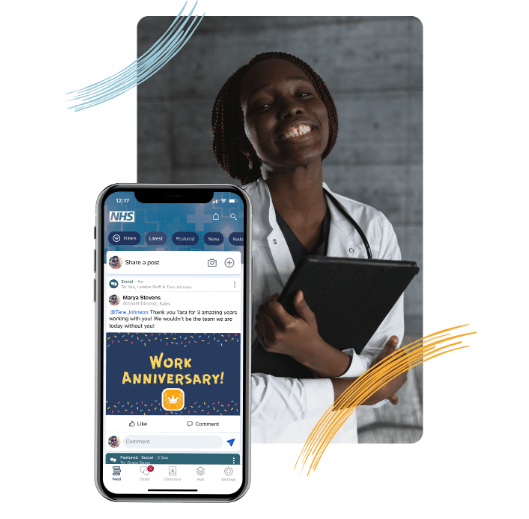
Celebrate work anniversaries, team wins, individual contributions, and personal milestones, tying recognition back to your company values for extra culture points.
Also, give employees the opportunity to praise each other. 75% of employees say that giving recognition makes them want to stay at their current organization longer.
How Blink helps
Blink’s employee recognition tools make it easy for managers and peers to celebrate great work. They can post personalized recognition to the news feed, making it visible to the whole team and giving everyone the opportunity to add their congratulations.
With Blink, recognition tools and posts are accessible because they’re part of the platform employees already use. So it’s easy to make appreciation a daily habit, not a quarterly obligation.
2. Gather — and act on — feedback
Listening to employees is important. But it’s pointless unless you’re prepared to act on what they say. Organizations that gather feedback regularly and visibly respond to it, build the kind of trust that drives engagement.
A strong feedback strategy includes regular, targeted mechanisms for gathering employee sentiment, clear processes for analyzing and acting on results, and transparent communication back to employees about what’s changing as a result of their input.
How Blink helps
Blink helps you go beyond the annual employee experience survey. Instead, it’s easy to launch quarterly surveys, pulse surveys, and quick-fire polls. Employees can provide feedback right from the Blink app, so you get better response rates. You also get AI-powered analytics that help you make sense of survey results.
{{mobile-live-stream-poll="/image"}}
3. Prioritize employee well-being
Realistic workloads. Accessible support. Flexible working. Benefits built around your teams. These things all contribute to an environment where employees can be — and do — their best.
So how do you build well-being into your employee experience strategy?
Consider the needs of different employee groups: carers, women experiencing menopause, frontline, remote, disabled, and neurodivergent workers. Make benefits and support easy to find and access. Ensure managers know how to spot the signs of stress and burnout.
Also, foster an open culture where staff feel comfortable speaking about their well-being and any support they might need.
How Blink helps
Blink integrates with well-being tools and allows you to signpost benefits and well-being resources in one accessible dashboard. The platform also features instant chat tools, with voice and video calling capabilities — so it’s easy for managers to check in with employees regularly.
4. Use data to make EX decisions
Employee experience strategy is most effective when it’s based on real-world evidence from your organization. Gut instinct and anecdotal evidence aren’t enough — particularly in large, distributed organizations where the experience can vary significantly by team, location, shift, or tenure.
Real-time data from a consolidated EX platform gives insight into what’s working, where engagement is dropping, which communication is landing, and where interventions are needed. The best tools allow you to segment this data to really understand what EX looks like across your organization.
By treating employee experience as an ongoing project and committing to ongoing measurement, you can develop initiatives that really move the needle on company EX.
How Blink helps
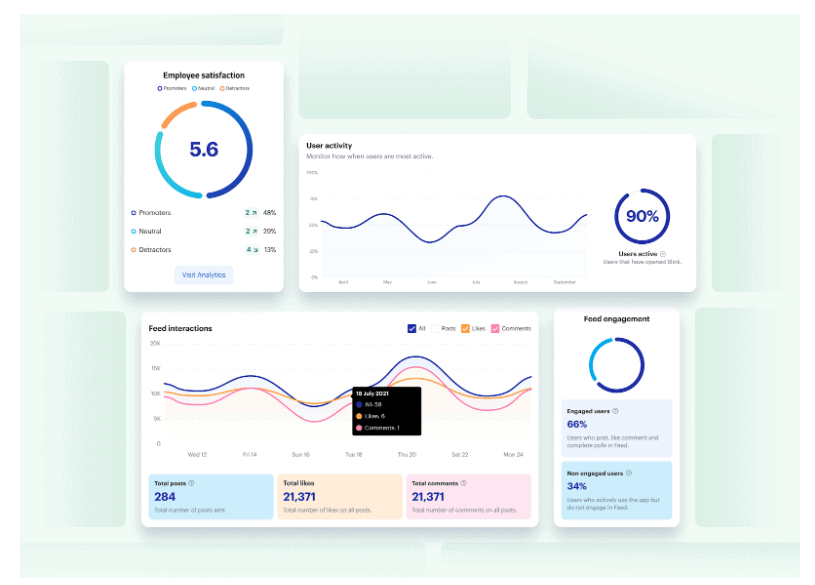
Blink’s analytics dashboard gives teams real-time insight into employee engagement, content performance, survey results, employee sentiment, and platform adoption. You can also see how these metrics connect to employee turnover — and filter data by department, role, or location.
With Bink, it’s easy to spot trends and compare employee experience for different workforce segments.
5. Personalize experiences
A one-size-fits-all approach to employee experience rarely fits anyone particularly well. Employees in different roles, at different stages of their career, and in different locations have different needs — and an experience strategy that acknowledges those differences is much more effective than one that doesn’t.
Personalization doesn’t have to mean creating a bespoke experience for every individual. It means ensuring that the content employees see, the communications they receive, and the development opportunities surfaced to them are timely and relevant.
How Blink helps
Blink’s audience targeting tools allow you to segment employees, deliver targeted messages, and improve engagement with internal comms.
You can also design employee journeys, where the right content is automatically delivered to your people at the right point in the employee life cycle. This feature is particularly useful during the onboarding process, where you can make sure new hires get all the info they need to hit the ground running.
{{mobile-mandatory-reads="/image"}}
6. Streamline the digital employee experience
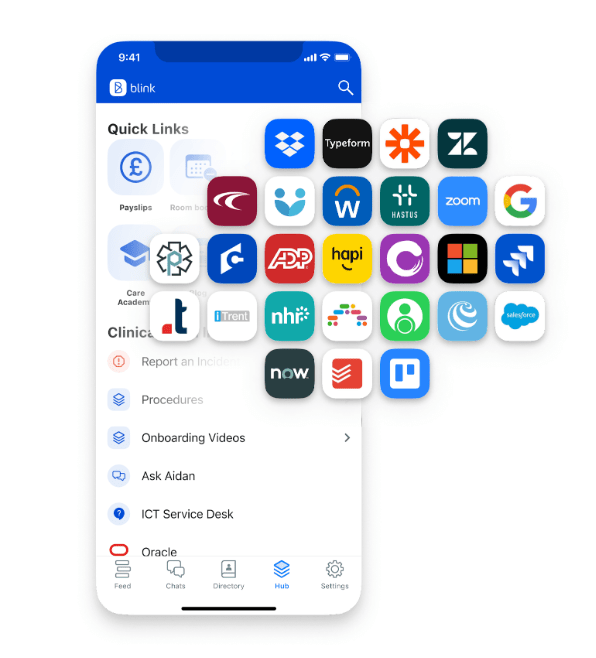
Fragmented workplace technology is one of the most consistent drags on employee experience. It’s estimated that the average worker spends 9% of their year — almost 200 hours — just switching between workplace apps.
When tech tools don’t offer an intuitive experience, when they don’t integrate and require separate logins, the result is app overwhelm. Employees waste time and energy navigating a complex tech stack.
The answer? Fewer, better-connected tools, accessible by a single dashboard and a single set of login credentials. You use fewer point solutions (tech tools that only perform a single function) and instead, implement software that covers more of your bases as an organization.
How Blink helps
Blink acts as a digital front door to all workplace software. Through single sign-on and deep integrations with HR, payroll, scheduling, and operational systems, employees can access everything they need from one mobile-first platform. This reduces app overload and improves digital employee experience.
7. Support peer-to-peer connection
87% of employees say that close work friendships are very important to them. And workers who feel genuinely connected to their peers are more engaged, more resilient to change, and more likely to stay working for your organization.
For organizations with dispersed teams, employees across multiple shifts and sites, or a significant proportion of frontline workers, building peer connection requires deliberate effort. Because without regular face-to-face contact, it’s hard for employees to find their people.
How Blink helps
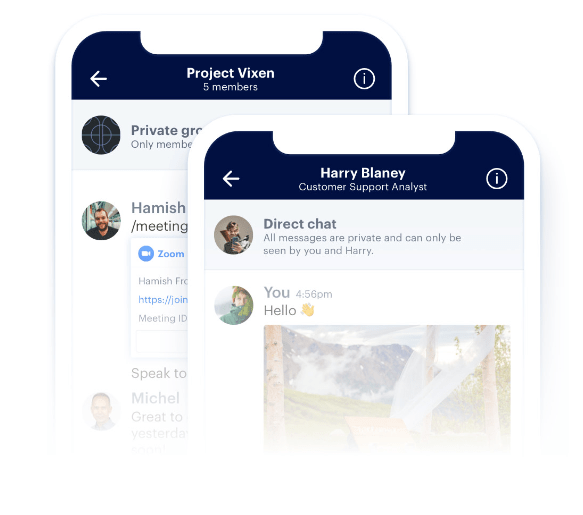
Blink’s chat and communities features give employees a way to connect with co-workers straight from their smartphones. They can share updates, ask questions, seek support, and celebrate wins. They can find like-minded colleagues and build a sense of belonging. This helps employees feel more connected to each other — and to the wider organization.
8. Keep employees in the loop
Employees who feel informed are more engaged, more aligned, and more likely to trust your organization. This requires more than simply sending updates. It requires communication that employees actually want to consume.
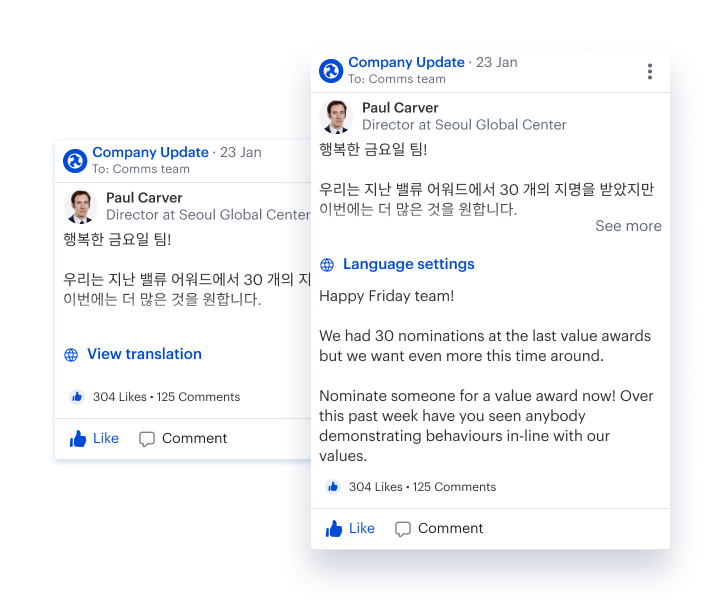
So replace static, text-heavy announcements with visual, multimedia content — the type that employees encounter in every other part of their lives. Humanize leadership comms by ditching the corporate jargon and incorporating empathy and storytelling. Give employees the opportunity to interact, via comments, questions, or emoji reactions.
Also consider the mix of internal communication channels you’re currently using. The best channels reach every employee, no matter where and when they work.
How Blink helps
Blink provides an engaging, modern social experience. You can use the personalized news feed to share photos, recognition posts, short-form video stories, and quick-fire polls. You can live stream events — like town halls and leadership Q&As.
As well as keeping employees informed, you also bring them into the conversation, allowing people to comment, react, and interact with content in real time.
{{human-internal-comms="/callouts"}}
9. Give employees self-serve tools
When employees can’t find what they need quickly, they waste time searching for it — or ask a manager or co-worker for help. This creates friction and it harms the employee experience.
Employees should have easy access to workplace resources, like policies, FAQs, handbooks, and training documents. They should be able to check a payslip, request leave, or swap a shift without facing lengthy systems and undue stress.
Self-serve tools are key. Make everyday tasks and information available from a single, user-friendly platform, and employees spend less time searching and waiting — and more time doing the work they were hired to do.
This is good for productivity and employee satisfaction. It also reduces the administrative burden on HR teams and managers — so you get far-reaching experience benefits.
How Blink helps
Blink’s content hub gives employees a searchable, centralized home for all workplace documents and resources. Integrations and digital forms also allow employees to swap shifts, check payslips, request leave, and even report a safety issue, in just a couple of taps. You streamline workflows, reduce unnecessary queries, and improve EX.
The role of employee experience software (and what to look for in an EX platform)
Delivering a great employee experience at scale isn’t something HR teams can do manually — especially in large, distributed, or frontline-heavy organizations.
Employee experience software is the vital infrastructure that makes it happen. The best employee experience tools bring together communication, resources, feedback, and workflows into a single, accessible platform. They give every employee a consistent, connected experience, wherever they work.
Updates reach the right people at the right time. Feedback is captured in real time. Everyday tasks become quicker and easier to complete. Employees feel part of the company conversation and an inclusive company culture.
For HR teams, using an employee experience platform means less time on routine comms and answering repeat questions. It means access to a treasure trove of EX data. And it means more bandwidth for strategic work that really moves the dial on engagement, retention, and performance.
There are lots of employee experience solutions out there. Key things to look for when deciding on the right employee experience software for your organization include:
A user-friendly interface. The best platforms feel familiar from day one — so you ensure adoption and usage.
Personalization and customization. Dashboards, tools, and workflows can be tailored to the needs of your organization.
Employee self-service. Employees can access information and tools independently, so HR spends less time handling routine requests.
A comprehensive feature set. To reduce the need for multiple apps, you need a platform that combines everything you need — either through built-in functionality or deep integrations.
Mobile accessibility. Mobile-first platforms were designed with the mobile experience as a priority — so employees enjoy the same great experience no matter which device they use.
Analytics and reporting. When you have real-time insight into engagement, satisfaction, and retention, making meaningful EX improvements is much easier.
{{mobile-desktop-main="/image"}}
Redefine employee experience — and make every work day better — with Blink
Employee experience isn’t built in a single moment or a single initiative. It’s shaped every day — through the tools people use, the communications they receive, and how supported they feel by your organization.
Get it right and both employees and the business benefit. You see higher engagement, better performance, and stronger retention. A workforce that’s more connected, aligned, and motivated.
Delivering this kind of experience consistently — across roles, locations, and employee groups — requires the right infrastructure.
That’s where Blink comes in.
Blink puts everything employees need into one simple, mobile-first employee experience platform — from communication and feedback to recognition and resources. It gives HR teams the visibility and control to improve employee experience at scale, while making work easier for employees.
Frequently asked questions
Employee experience spans six stages: attract, hire, onboard, engage, develop, and exit. These key points in the employee lifecycle shape how employees feel about your company. Developing strategies to improve employee experience at each of these phases is, therefore, really important.
Some examples of good employee experience include:
Ultimately, when staff are informed, supported, connected, and listened to, they enjoy a more positive employee experience.
Employee experience is the sum of all interactions an employee has with your organization — from the moment they first hear about you to the day they leave your company. It’s how employees feel about working at your organization. And it’s shaped by workplace culture, relationships, technology, processes, and well-being.
To provide a good employee experience, you should prioritize your people — across all lifecycle stages, through everyday interactions, and in your company values.
Focus on culture, well-being, growth opportunities, engagement, and support systems. When these elements are in place, employees are more likely to enjoy working for your company and are more likely to give their all.
While HR teams often take charge of employee experience design and management, delivering a positive employee experience is the responsibility of the entire company.
Leaders, managers, and employees themselves shape employee experience. So HR needs to establish clear company values, establish repeatable EX practices, and give managers and leaders the training they need to deliver an employee experience strategy.
Blink. And build an organization where people love to work.









.png)